


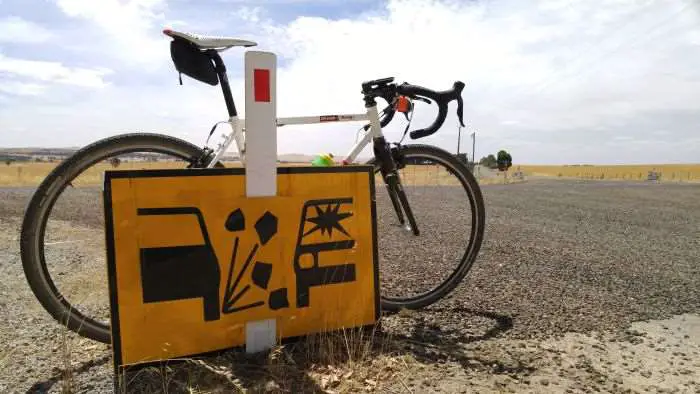
“As I sit here pondering where it all went wrong, while nursing a deep gash on my elbow and the absence of skin on my palm and leg, it makes me think about how history repeats itself.” – Wayne Parsons
Bear with me.
Back in the early days of mountain biking, as some of you may remember, tire brands were still trying to sort out tread patterns, rubber compounds, and widths. While some brands nailed it early on, others were producing absolute garbage that directly induced injury and ended careers. Even other riders would give unsolicited advice about tires based solely on superficial things like colour or naming conventions. The advice was wrong or ill-informed most of the time, while people lauded tires that have since gone the way of the Dodo. When a tire model’s most influential attribute was its name, grip wasn’t the biggest selling feature the brand was chasing.
(“Scratch and Sniff” anyone?)
I also learned that some very skilled racers competing at the World Cup level didn’t know what went into making a tire a good performer. That was a shocking part for me, learning that riders who were far better than you were giving terrible advice on tire selection. And even today, there are credible cycling journalists handing out opinions on tires that are ill-informed or simply wrong.
The mountain bike industry learned a lot over those years, and I’d say those growing pains have all but disappeared. Almost every mountain bike tire brand produces good, thoughtfully designed tires that work as intended. Questionable tread patterns have largely disappeared from the big brands’ catalogues (remember downhill semi-slicks?). And the brands that pushed nonsensical designs have faded from the limelight. Taking cues from the moto world, many off-road tires now feature much simpler tread designs than their forebears. As a former engineer at a major tire brand once told me, they designed tires to look good, with not much thought for how tread patterns affected performance.
Design Infancy.
Mass-produced gravel bikes haven’t been around that long, and many credit the 2012 Salsa Warbird as the first real attempt. Other brands have tried, but for argument’s sake, we’ll go with Salsa for helping set the stone for modern gravel riding. In the grand scheme, gravel bikes are still relatively new and oddball tread designs are more than evident. Tire brands are throwing their $hit against the wall to see what sticks. Take a look and tell me I’m wrong. Gravel bikes themselves are growing into subcategories as brands try to delineate riding styles. I’m shaking my head at you, aero-gravel.
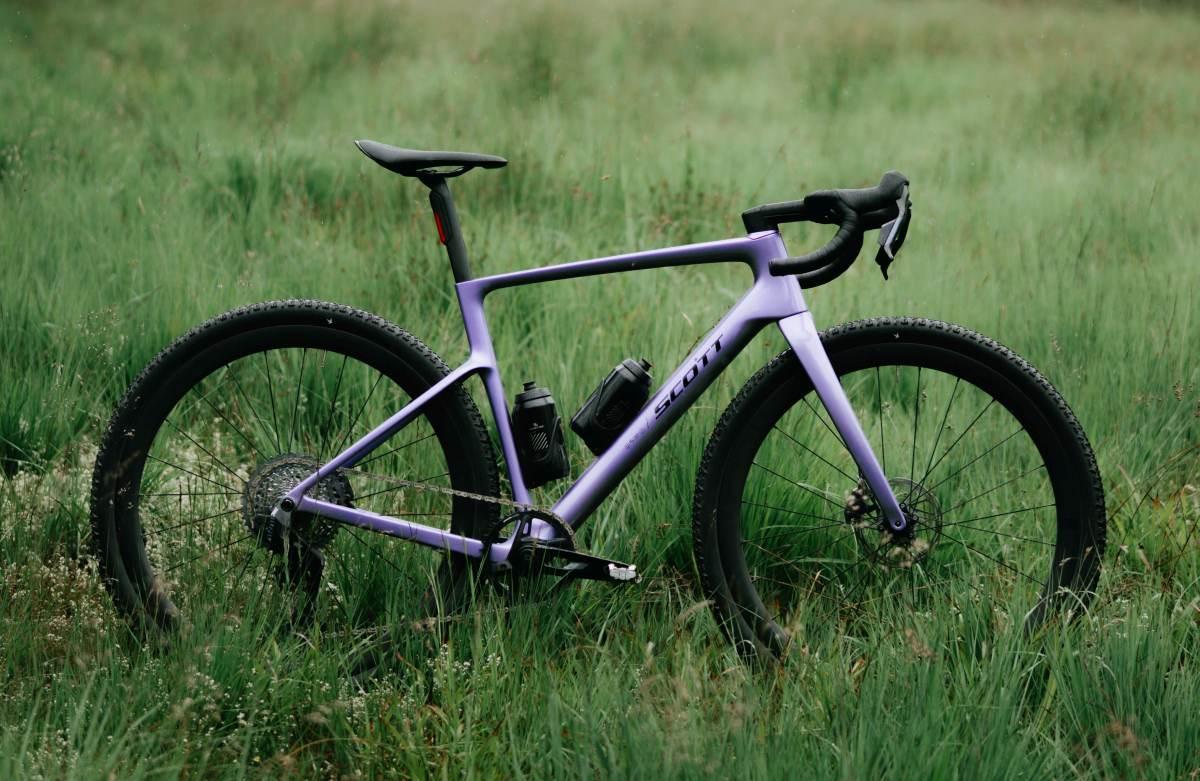
Now that I’m riding gravel almost exclusively, I’m getting a sense of deja-vu. To me, many gravel tire manufacturers are confused and clamouring to produce the next big advancement in tire design. Look around at what’s available: wild tread patterns that work well in the CAD phase, but have major practical flaws. We are in tread-pattern infancy, waiting for the industry to mature in the same way mountain biking did. As gravel riding defines itself and tries to specialize, unmistakably terrible design ideas are on the market just waiting to fade into memory.
A Learning Lesson.
Enter one example for my argument: The Pirelli Cinturato Gravel M tire.
I’ve read comments from riders saying that every gravel tire is a compromise. That may be true, as a typical gravel bike will see equal duties on and off road. In essence, gravel bikes themselves are a compromise. Mitigating it is what we’re all striving for; unless you ride in an area strictly composed of perfectly good dirt roads, then your choices become clearer.
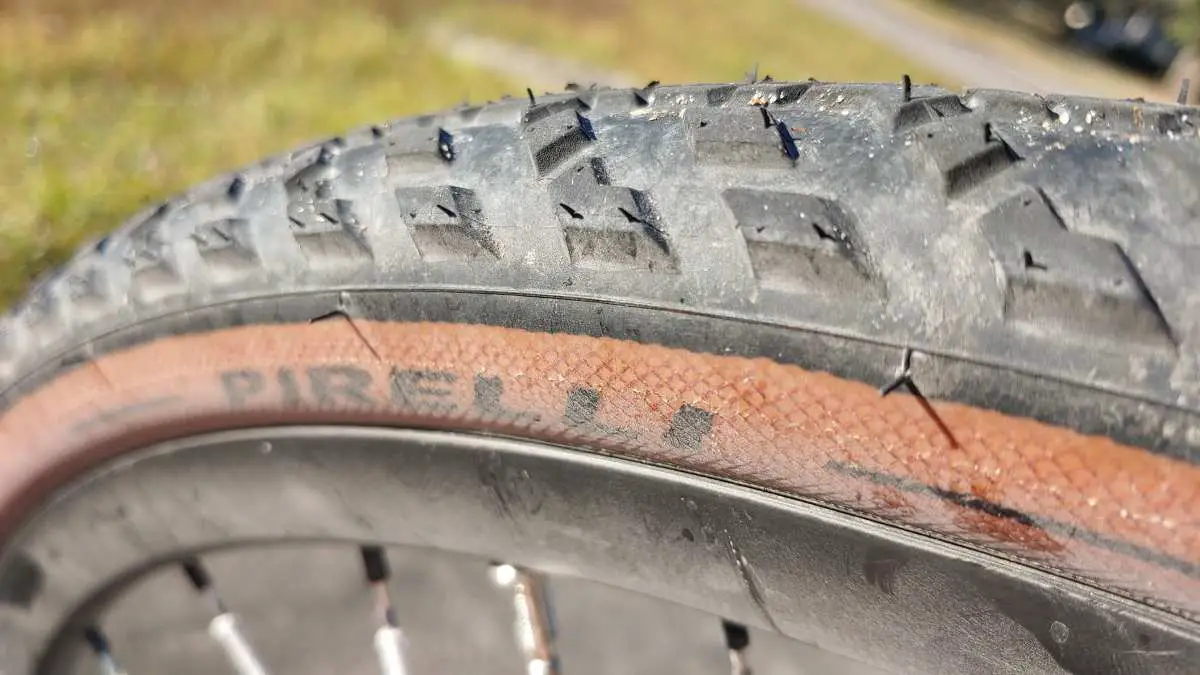
Using that as a guide and going against my gut instincts as a self-professed tire nut, I trusted the online reviews, recommendations from credible journalists and other riders and bought a pair of Pirelli Cinturato Gravel M tires. I also took a chance by going up a size from a 40c Maxxis Rambler to a 45c Pirelli. For me, gravel bikes are road bikes with off-road versatility, not curly-barred mountain bikes hell-bent on tackling gnarly singletrack. I don’t want larger tires that would kill any on-road efficiency, but something a bit smaller that would work well anywhere. An appropriate compromise, if you will.
I went against my beliefs that tread patterns only require simple blocks, solid shoulder lugs, and nothing oddly shaped to get the job done. I chose these tires to suit the terrain I ride – a mix of double track and paved side roads. I ignored the gaping lack of transition knobs that should have foretold my future elbow injury. Reluctantly, I gave the pro Cinturato camp a chance to choose tires for me. A rare move indeed.
On my first ride, I thought these tires were moderately okay, performing adequately on and off-road, as long as you were going in a straight line. Nothing stood out as a shining beacon meant to lead me into gravel riding bliss. Seemingly perfect for where I live in Vancouver, they roll quickly on pavement, yet nothing seemed too unnerving off-road. Although, that first ride had post-rain hero dirt.
Early into my second ride aboard these Pirellis, I crashed hard in a loose downhill corner. It’s a turn I’ve hit confidently many times without even a slight wobble, and almost always at a higher pace. It’s one of those turns that I’ve ridden enough to know exactly what my bike is going to do, based on the tires I normally ride, mixed with a tiny bit of skill and heaps of confidence. Yes, my tires have slipped in this particular corner a few times before, but I always know to expect the last-second grab.
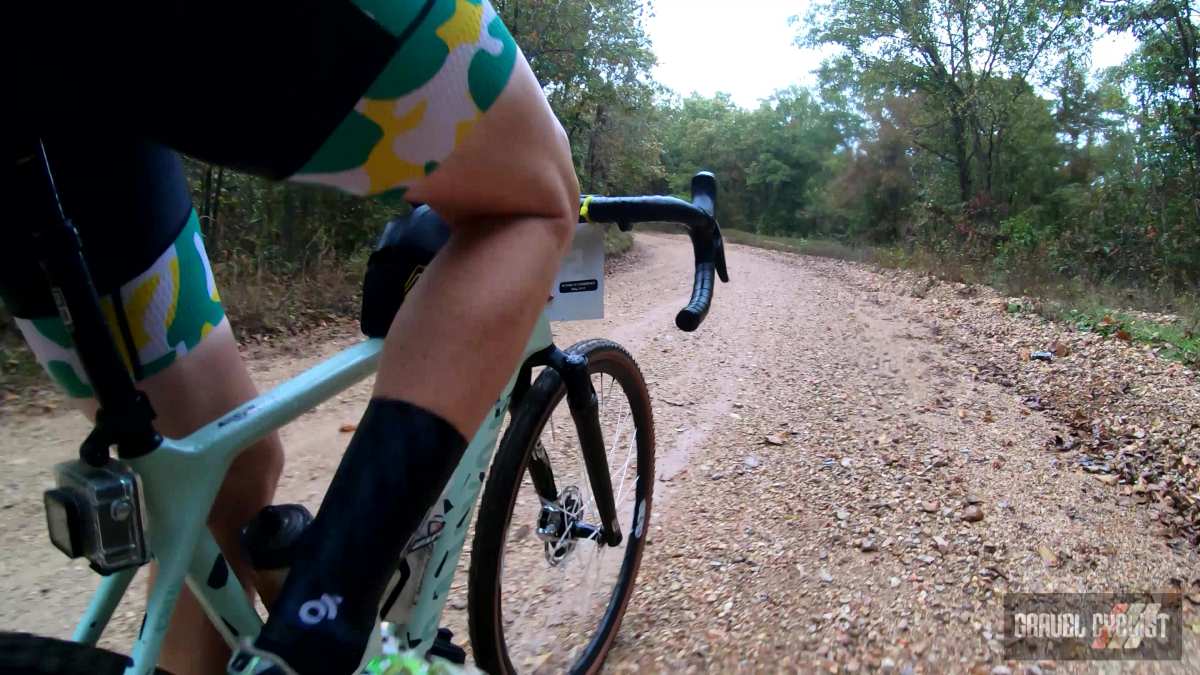
I approached that corner with trepidation and more caution than normal, knowing that I hadn’t yet tested the tread pattern of these Pirellis. Perhaps I should have gotten off and walked. Perhaps I should have trusted my gut instincts that this goofy tread pattern wouldn’t hold up under loose conditions. My old self would have shuddered knowing that I was lured in by fancy marketing and half-hearted reviews rather than looking more closely at the tread pattern. Letting my guard down in my old age. For shame.
I went down hard and opened up a huge gash on my elbow and scraped up my hands and lower leg. It happened so fast that I had nearly no time to react. From racing downhill and riding mountain bikes most of my life, I’ve crashed plenty of times before. Thankfully, this was only my first one on a gravel bike. Evidently, the capability to react to tire slippage is far less on a gravel bike compared to a mountain bike. There’s hardly any warning, and once she goes, she goes. And when there is almost a complete absence of transition knobs, you’re rolling the dice at whether or not you’re going to hit the floor.
History is repeating itself.
Getting back to the mountain biking analogy. This crash instantly reminded me of a time in the early 2000’s when Intense introduced a very exclusive downhill tire labelled “For Racing Only”. As a self-professed racing snob, I mounted them on my bike, believing the marketing to be true. Why wouldn’t it be? World Cup-level downhillers used these tires. Within minutes on my maiden voyage, I crashed hard on a rooty section of trail that I’ve ridden a hundred times before. How could these tires, with that FRO label and ultra sticky rubber, be absolute garbage? Well, I found out the hard way not to trust the marketing bull$hit that the industry was feeding me. My latest crash was eerily familiar to this one from 25 years ago. I fell into the same trap and paid the consequence.
What I’ve learned in the past 30 years is to avoid compromise and bold claims, especially with tire choice. Do you ride off-road? Then go for traction, always. Trust your instincts and avoid gimmicky tread patterns. You’ll likely suffer on pavement, but you’ll be less likely to end up in emerge. I’ll admit, it was only the second ride on the Cinturatos; Hardly enough time to decipher their overall gravel performance. On the other hand, knowing how many times I’ve railed this particular turn without my tires washing out made me wonder how good (or bad) these Pirellis are.
Think about tread patterns. No, really think about it. Irregularly shaped knobs will provide you with irregular traction. If one section of the tire has grip, but another section doesn’t, there’s a good chance you’re hitting the deck. Off-road tires need supportive shoulder lugs, with ample transition knobs, and something down the middle that aids in straight-line braking traction. There isn’t a secret formula – these basic principles are what works on a dynamic, rolling off-road tire. These types of tread designs, in one form or another, have been used in successful mountain bike and dirtbike tires for decades. If you’re also looking for a fast rolling tire, then you look for a closed pattern or lower the height of the knobs. Then it’s placement and size and that’s it. There’s nothing else to it.
I’ve always been a fan of Maxxis tires, going back to when I helped conceive a couple of redesigns for the original High Roller and Minion DHR. During that time, I dug deep into how tread performance affected traction, knowing that certain tread characteristics were paramount to tire performance. Things like hard braking edges and effective transition knobs that respond well to side loads under braking and not. More importantly, I learned that tread patterns didn’t require extravagant designs. Simplicity is key. These thoughts drove me to design better tires.
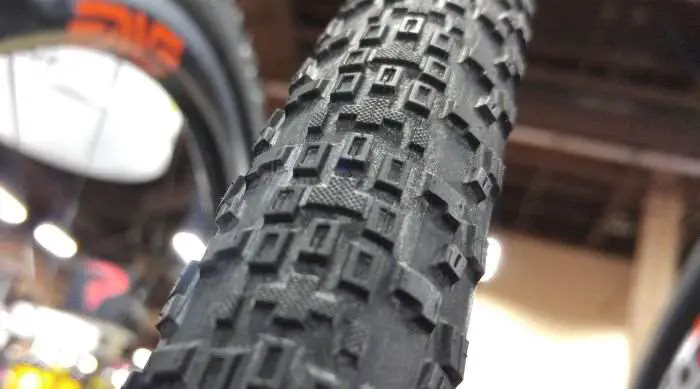
When I bought my first gravel bike in 2021, I ditched the stock rubber for a pair of Maxxis Ramblers. A simple tire swap turned the bike into a versatile weapon, capable of tackling loose gravel roads with confidence. That bike was a Specialized Diverge, and those stock tires were Specialized Pathfinders, which I thought were a major oversight for a bike with such off-road intentions. The Ramblers outshone the Pathfinders with remarkable ease, save for asphalt transitions. I thought the Pathfinder’s center-ridge to be a joke straight out of a department store mountain bike from the 80s, but no, people actually liked them. Credible, talented people like them. To this day, Specialized Pathfinders are lauded for their versatility and performance merits. I don’t get it. A raised center ridge does not lend itself to off-road grip. Neither do minuscule side knobs. For the industry to accept this tread pattern as something viable off-road shows how little we’ve learned from our mountain biking brethren. We’ve already been through this!
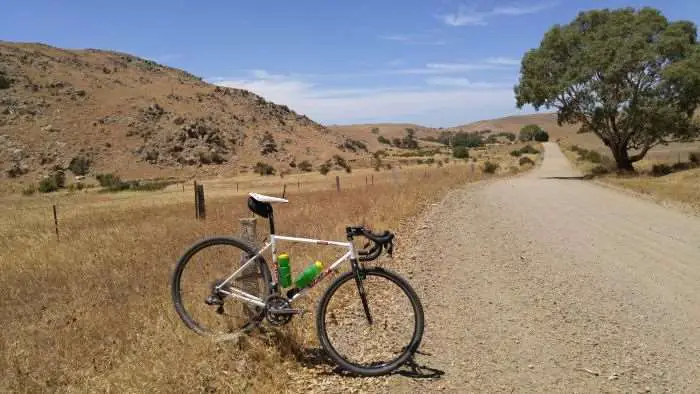
I see a repeat of those early days of riders arguing about what characteristics make tires good performers. Gravel riding is rife with nauseating marketing jargon and odd design choices. Gravel is so new that it seems like we’re being forced to go through these growing pains and riders are caught trying to figure it all out. Tire brands are focussing on rolling resistance and attempting to offer off-road grip on the same tire, but my thought is – maybe this is too much compromise. Let’s get back to basics and ask ourselves what we like most in a gravel tire, plus important things like how and where we ride.
Here I am, on the mend and back on the bike. I sold the Pirellis and bought another pair of Ramblers, but this time in 45c width. Although they’re dreadfully slow on pavement, they’re head and shoulders above the Cinturatos on gravel. It’s not even in the same conversation. Again, the tread pattern of the Ramblers are regular and predictable. And although half of my rides are on paved roads, I don’t care too much about a bit of extra drag. I want fast(ish) rolling off-road performance that I can confidently turn a corner on. More importantly, I want a tire that I know what it’s going to do so I can control the narrative. Is that too much to ask?
I’m positive that hindsight will sort it all out, but can’t we just fast-forward to the established stage and forget all these 90s era tires? Haven’t we learned enough from mountain biking?
Who is Wayne Parsons?
Wayne is a professionally-trained, multi-disciplinary, and real-world proven photographer based in North Vancouver, British Columbia.
While many photographers specialize in one subject area, my work is widely varied and covers numerous subject matters across multiple industries. Why? Because I believe that life is too interesting to limit yourself to one genre. Although my main interests are within the cycling industry, I also love shooting product, portraits, weddings, landscapes, wildlife, architecture, events, photojournalism and more.
Learn more at Wayne Parson’s Website.