

Trek CheckOUT Real-World No BS Review
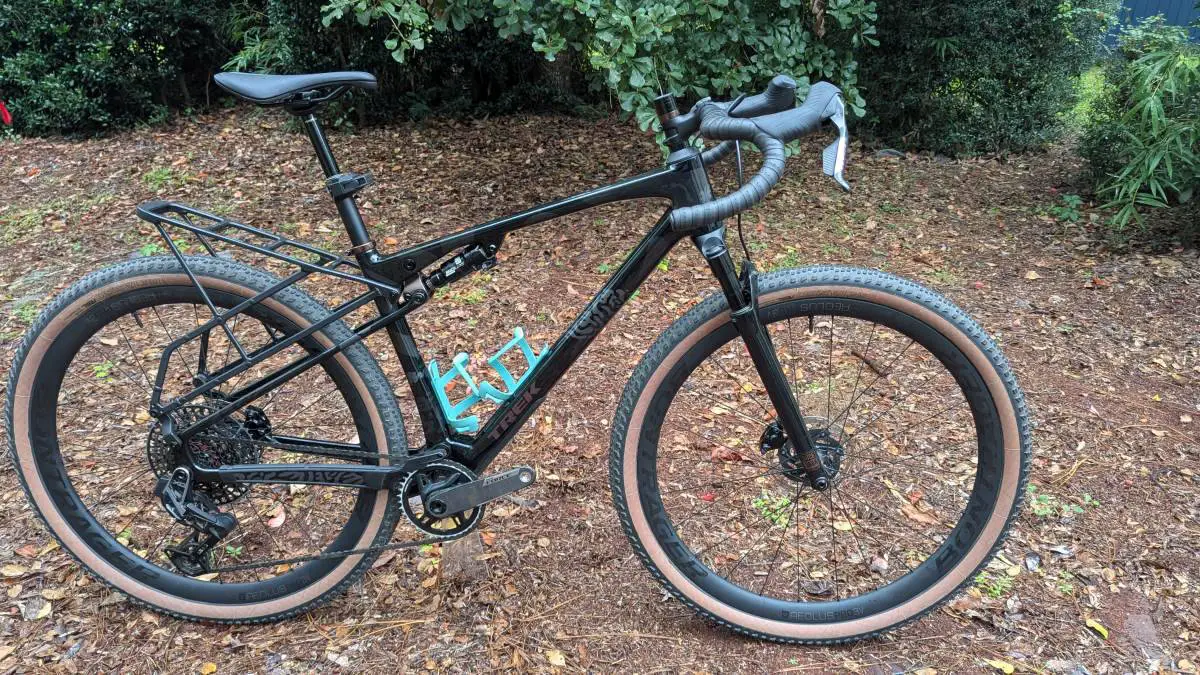
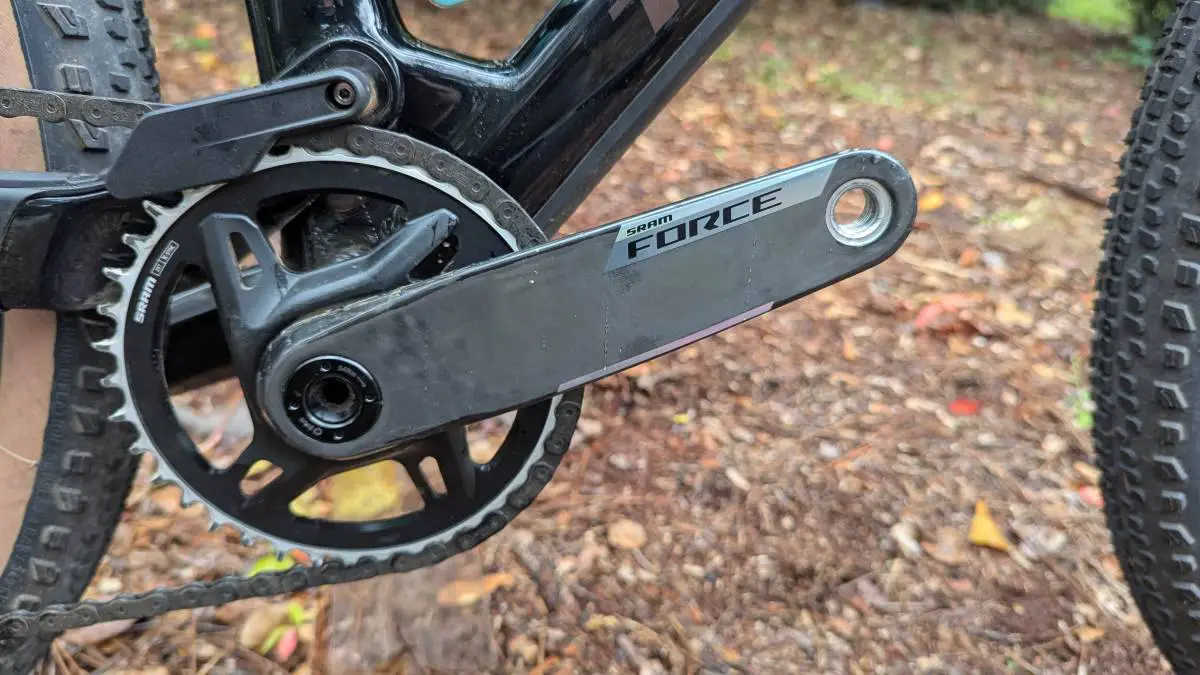
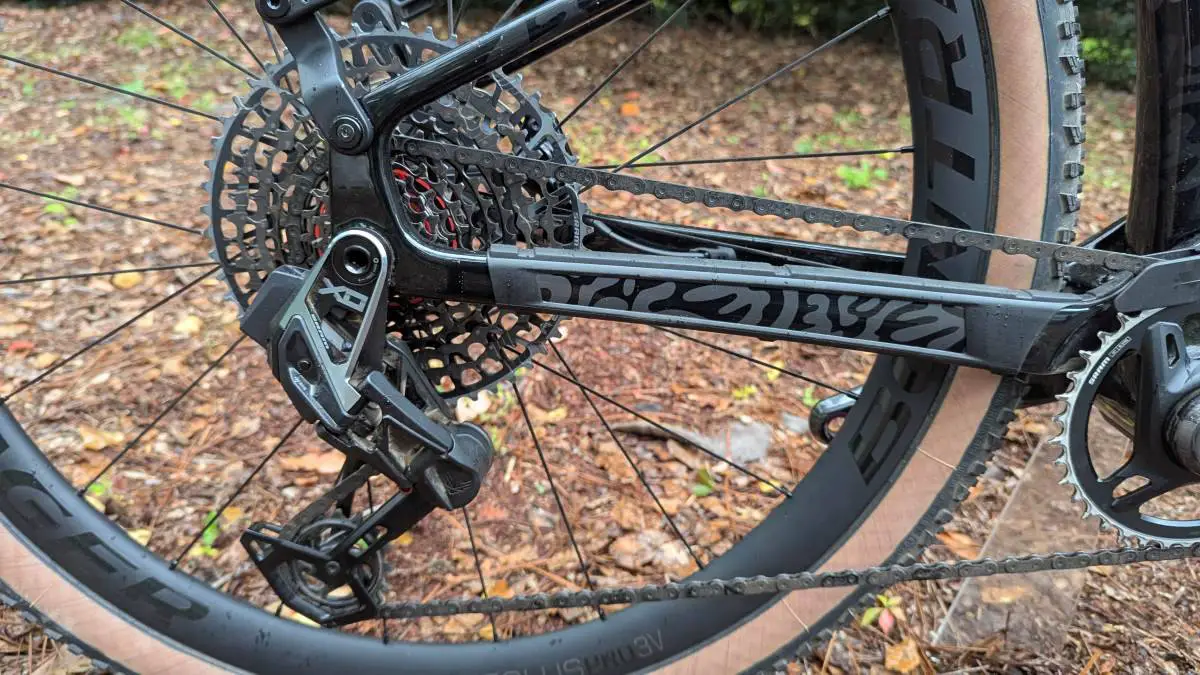
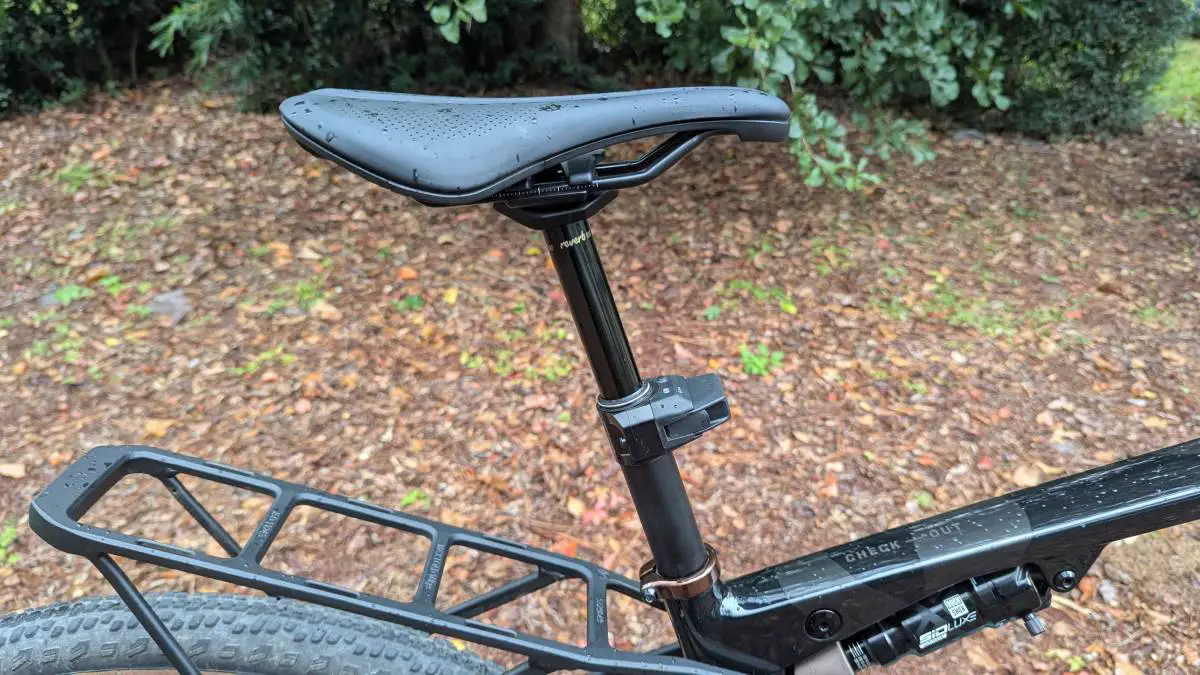
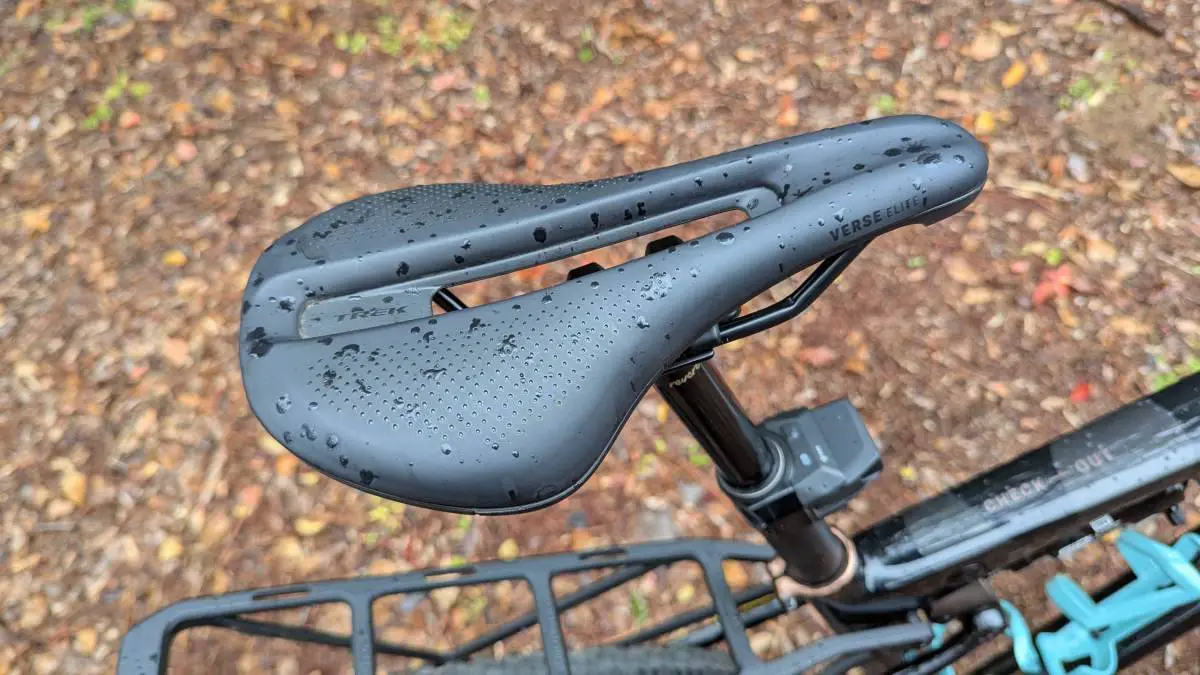
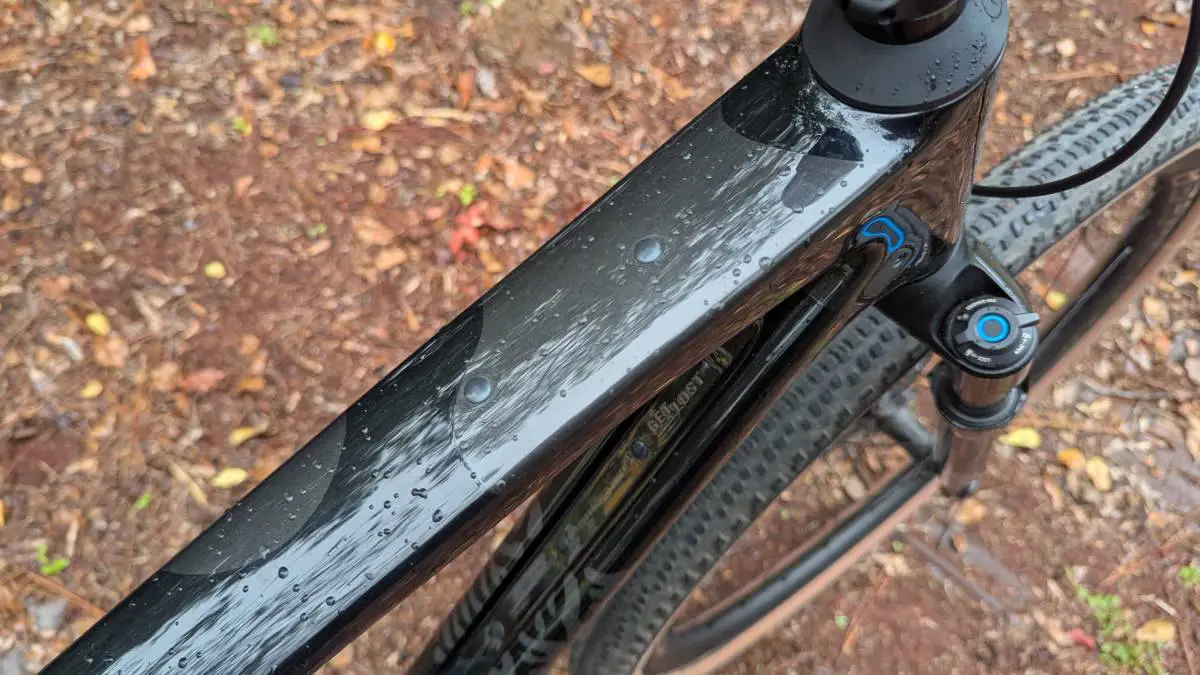
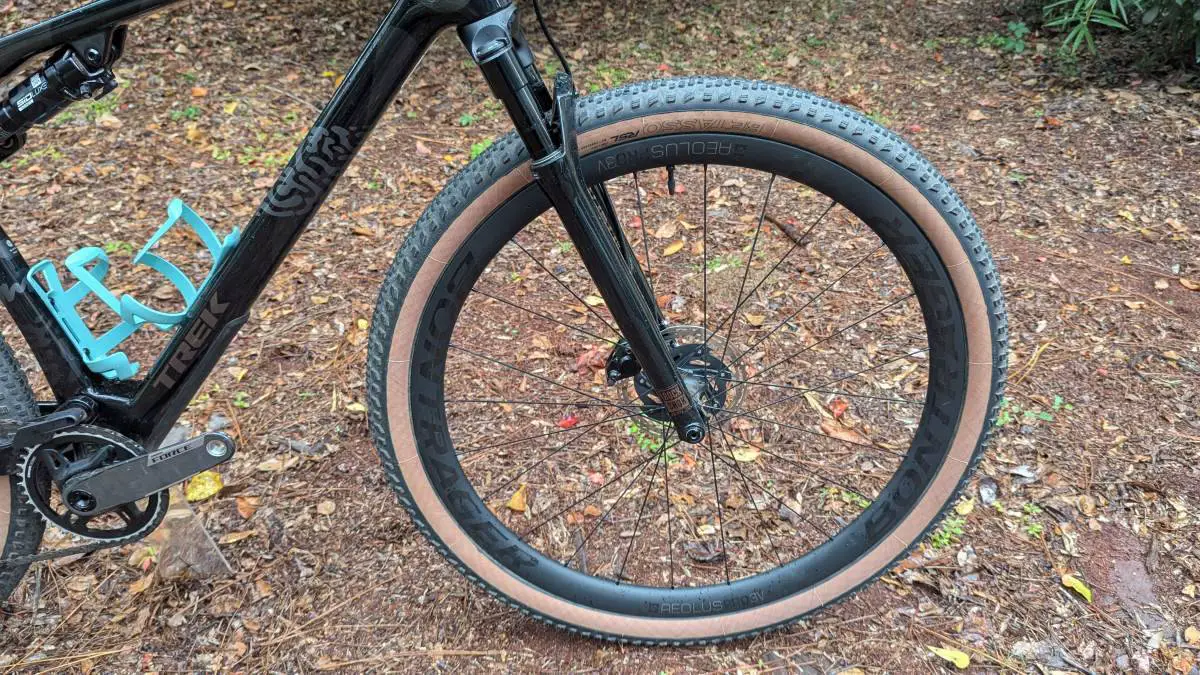
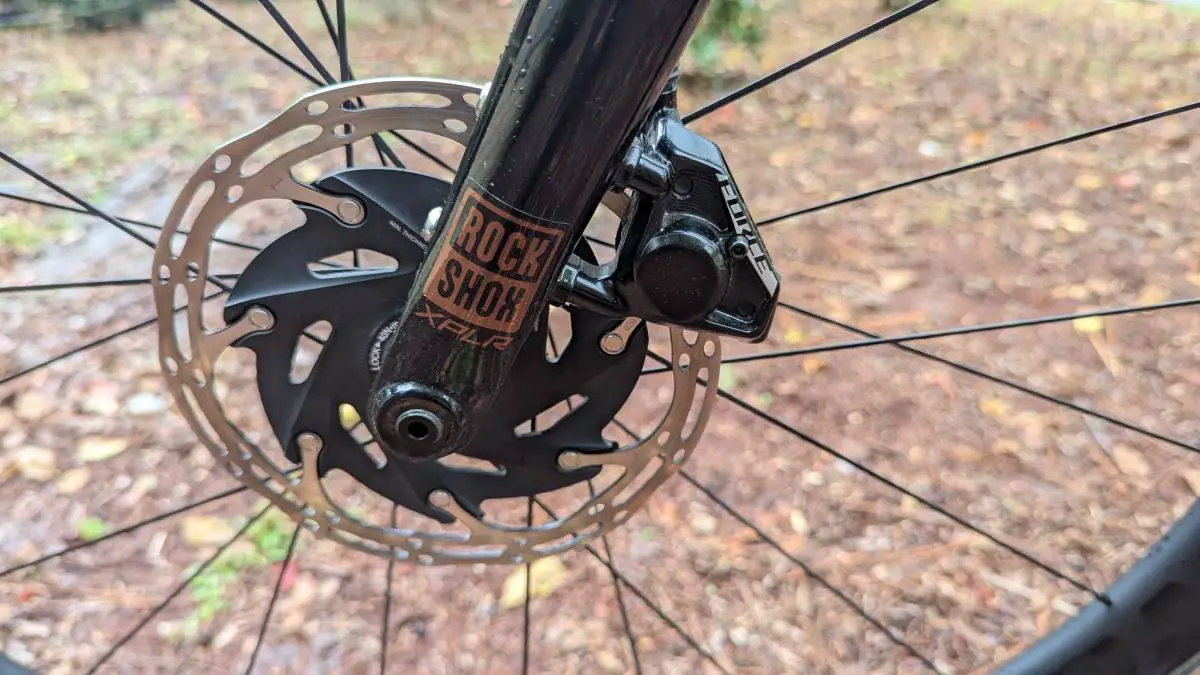
“CheckOUT SL 7 is a full-suspension gravel bike built for exploring rowdy roads, singletrack, and anything else you throw its way. Its carbon frame delivers 55mm of rear travel from a RockShox SIDluxe IsoStrut shock, while a RockShox Rudy XL fork smooths rowdy roads and trails with 60mm of travel. It gets upgrades where they matter most, like Bontrager Aeolus Pro 3V carbon wheels, a SRAM Force AXS E1 wireless 12-speed drivetrain, and a wireless RockShox Reverb AXS dropper post.” – Trek Bicycles
“Ride It All Suspension”
“55mm rear travel and a new 60mm Rudy XL suspension fork designed in collaboration with RockShox help smooth out rough gravel roads and let you venture onto singletrack with more comfort and capability than a rigid gravel bike.”
Trek CheckOUT Review Video
Alternative Video Link for those reading via email subscription
In this video, JOM of Gravel Cyclist provides a long-term review of the Trek CheckOUT; detailed specifications are covered and of course, the real-world riding experience.
Trek CheckOUT Written Ride Experience
Before I get into it, the Trek Checkout is not a Niner MCR 9 RDO. I reviewed that bike, liked it a lot, but just to mention the headtube angle of 71 degrees of the Niner vs 69 degrees of the CheckOUT I reviewed, I’m not turning this into a comparison video between the two.
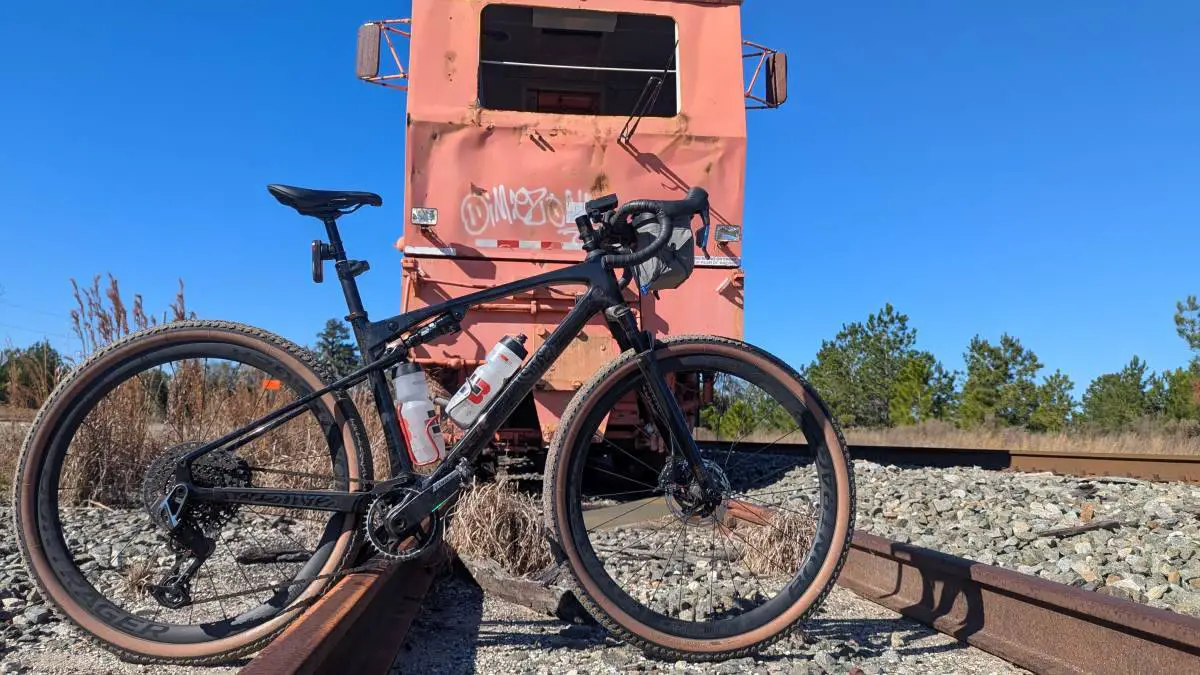
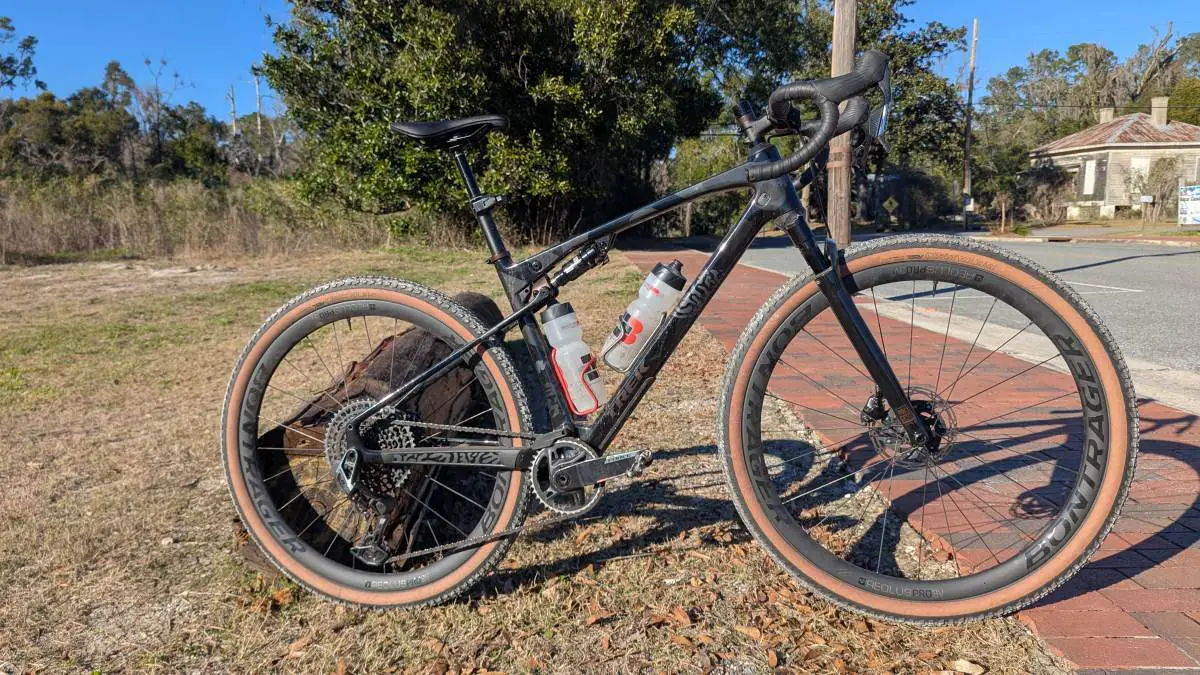
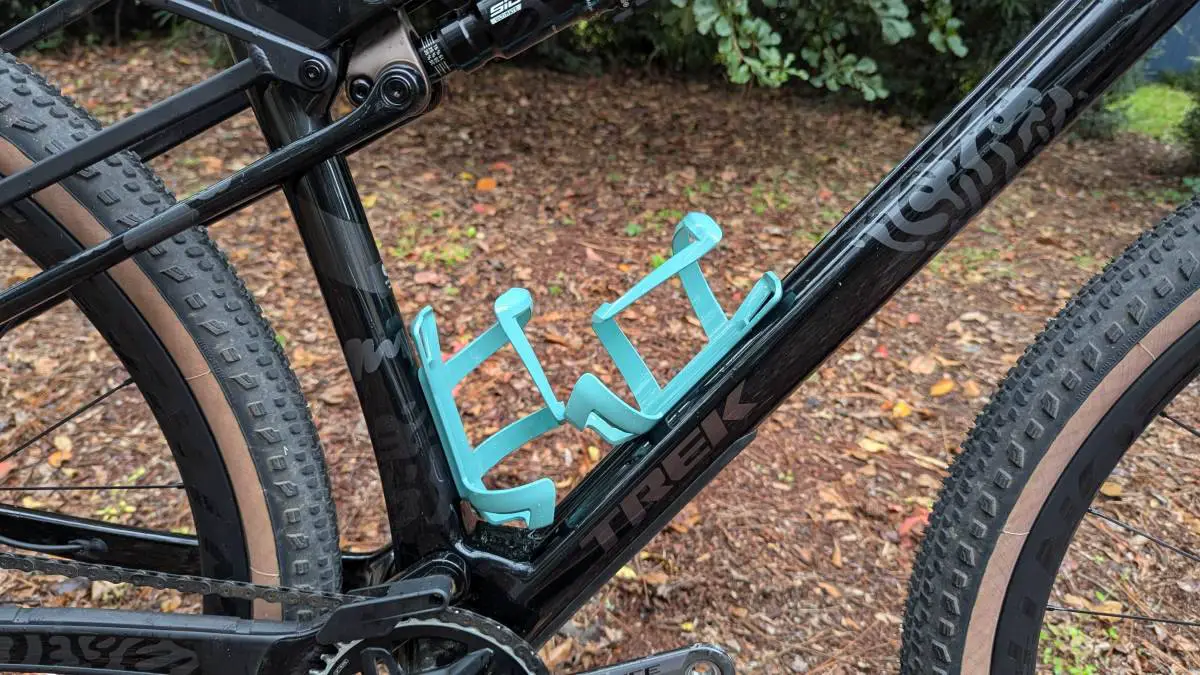
I’ve had this bike for a couple of months, not a couple of rides as with some of the BS I’ve seen other reviewers post. First up, CheckOUT isn’t light, with XTR pedals, Titanium bottle cages by King Cage & Wolf Tooth (sorry, I didn’t enjoy the Trek side loading cages), you’re looking at about 25.3lbs or 11.5kgs without the rack for a size medium with everything you see including the wireless dropper seatpost. The rack itself weighs 762 grams, so I would remove this immediately if you have no need for it.
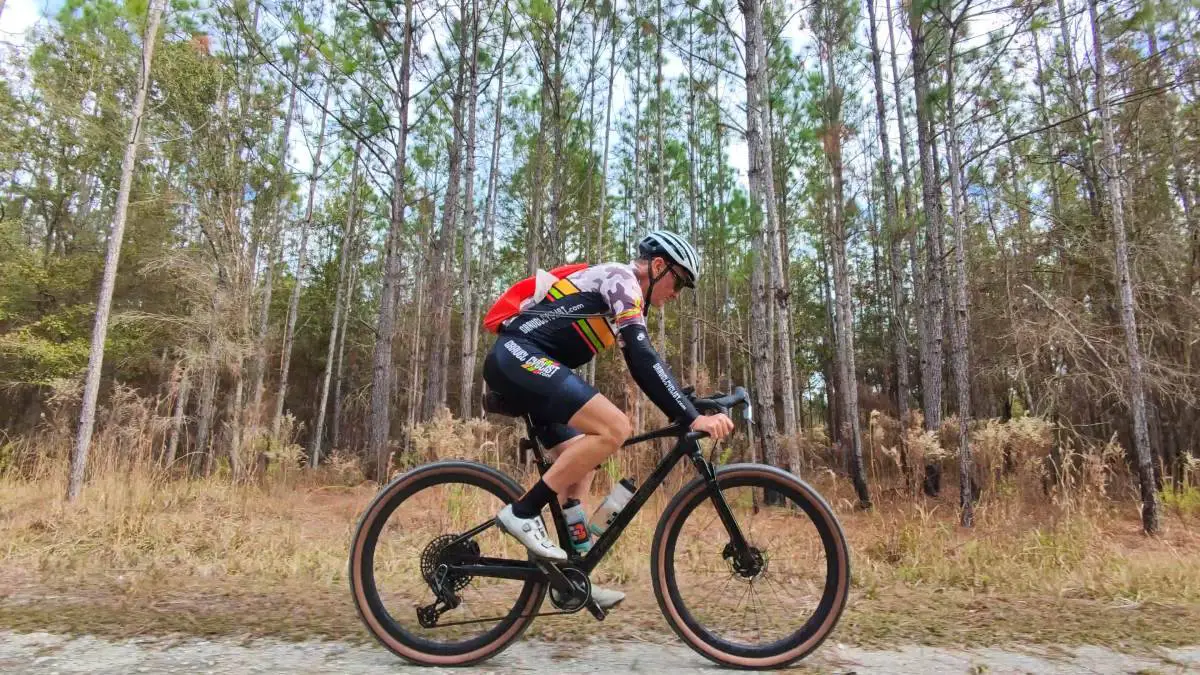
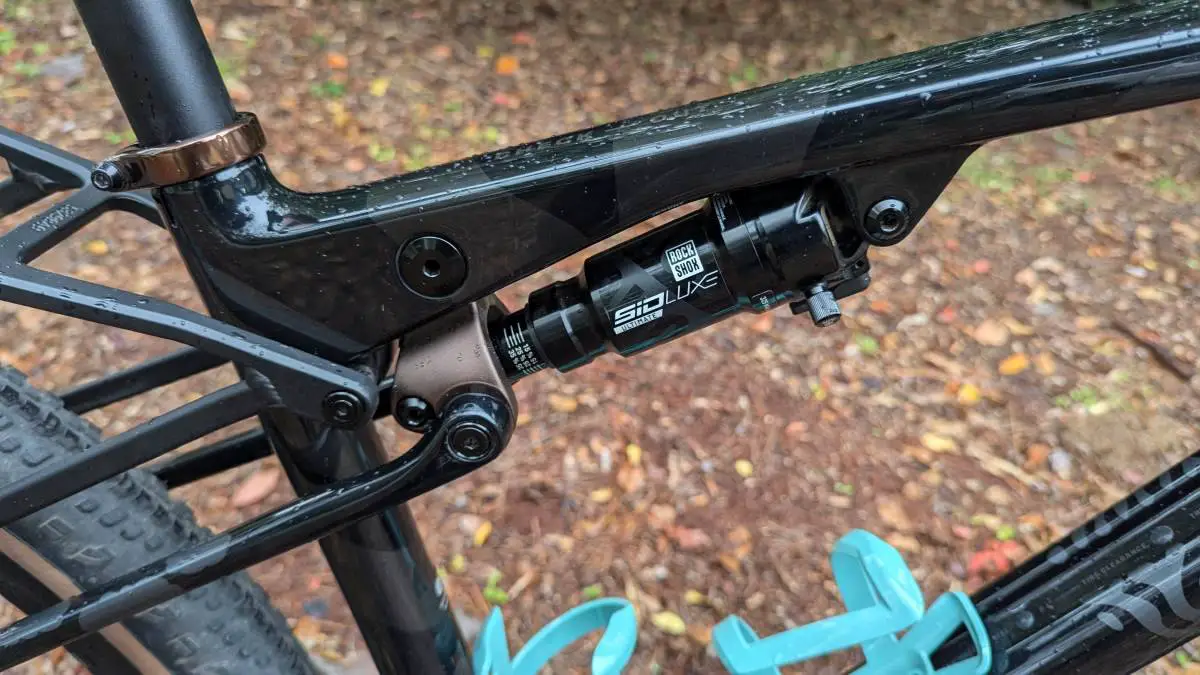
I’m not going to cover deep technical specs of the checkout’s suspension and how it works, mostly because this tech really is above my paygrade. For those inclined, have a Google. Rather, I’m going to impart how I felt the suspension impacted the riding experience. Don’t forget, you’ll need to setup your suspension front and rear to account for body weight, sag, etc.
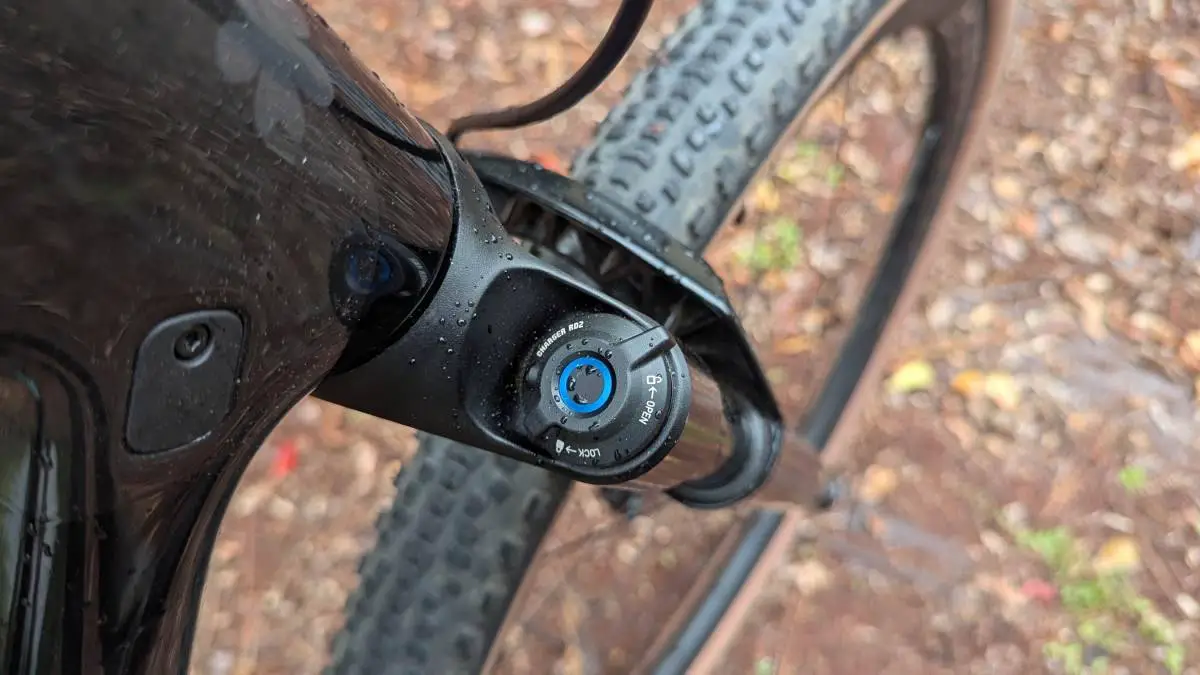
The weight wasn’t a bother cruising around on flatter or rolling terrain, but this isn’t a bike I’d recommend for your spirited gravel group ride. It isn’t that type of bike, Trek has other machines for more spirited riding. The CheckOUT’s heft was noticeable anytime the road tilted upward, and it’s not a bike I would recommend for climbing out of the saddle, unless you lock out the front fork at minimum. For seated climbing, my pedaling effort wasn’t robbed by the rear suspension bobbing about the place, rather a smooth sensation of traction, and comfort. Pretty efficient really. With all of that said, the CheckOUT certainly isn’t slow, rough and challenging terrain is where it shines.
The suspension massively smooths out the ride when you’re smashing potholes, front or rear, deliberate or otherwise, and the endless small bumps you feel riding mixed surface roads. If you’re thinking about racking up bike packing miles, or longer, exploration miles that may involve bush bashing, re-routing an so on, you will feel fresher because of the work the suspension and those 55mm Betasso tyres / tires have done for you. The suspension absolutely instills confidence and safety riding dodgy terrain, especially when descending. 60mm of travel is overkill on the fork for most normalish gravel roads, but absolutely spot on for this bike’s intended use case… crazy $hit.
Does the checkout’s suspension mitigate corrugations or washboard?
NO. These suspension designs simply cannot rebound fast enough to deal with this annoyance in the road surface.
And before someone chimes in telling me how good the Lauf fork is, aka the Lauf pogo stick fork as I call it, that’s completely worthless on corrugations, and is an absolute eyesore to boot. What works, big tyres, something the Checkout does have at 700c x 55 with the Betasso’s mentioned above, which had the biggest effect on ride comfort at low pressure, in that situation.
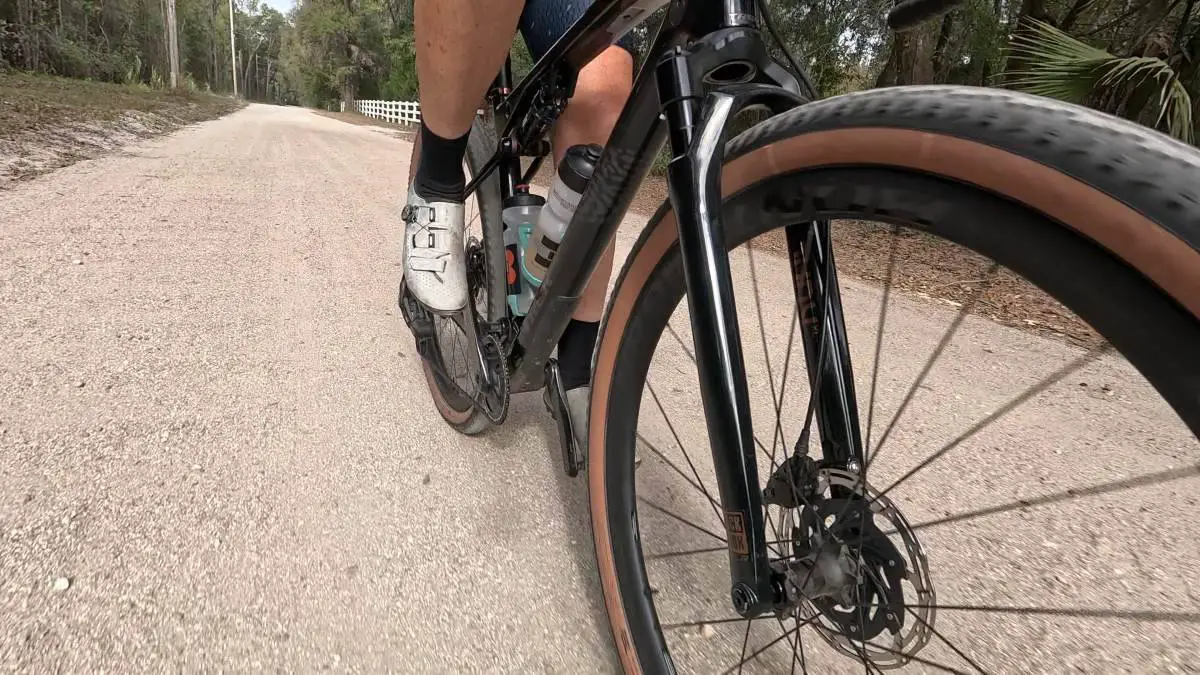
The CheckOUT isn’t simply a drop bar mountain bike. The crankset has a lower Q-factor, I like that, and you don’t have boost spaced wheels. The bike accepts wheels with a 12x100mm thru front, and 12x142mm thru axle rear. The checkout has me sitting more upright due to the taller front end and diminutive 60mm stem, but it didn’t feel horribly awkward, and I was really surprised by how well the bike steered.
That Handlebar
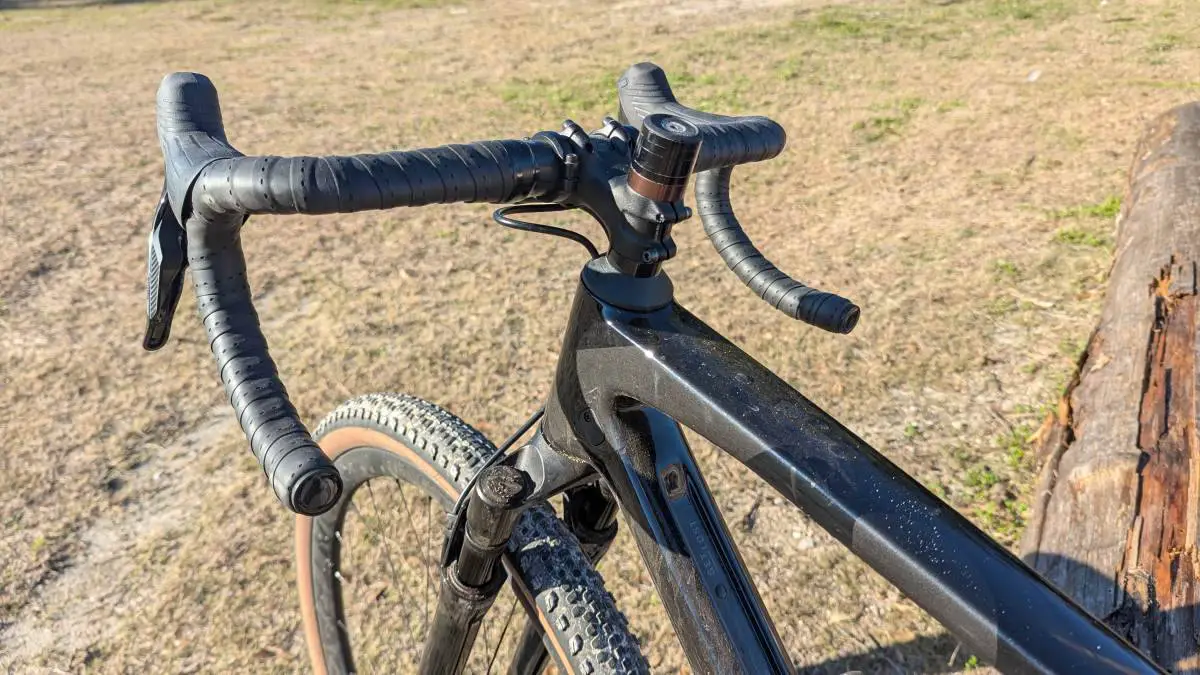
The stock Bontrager GR CheckOUT 44cm handlebar is designed to offer better control with the flared drops, and it’s construction touts some vibration damping. I’ll be honest here, I hated these handlebars. During many of the lengthy solo rides aboard this bike, my wrists were killing me from the angle my hands are forced to sit riding these bars. Sure, I understand the more control on the drops, but if you’re riding into a block headwind, these bars just open up your frontal profile, and make for a tougher effort.
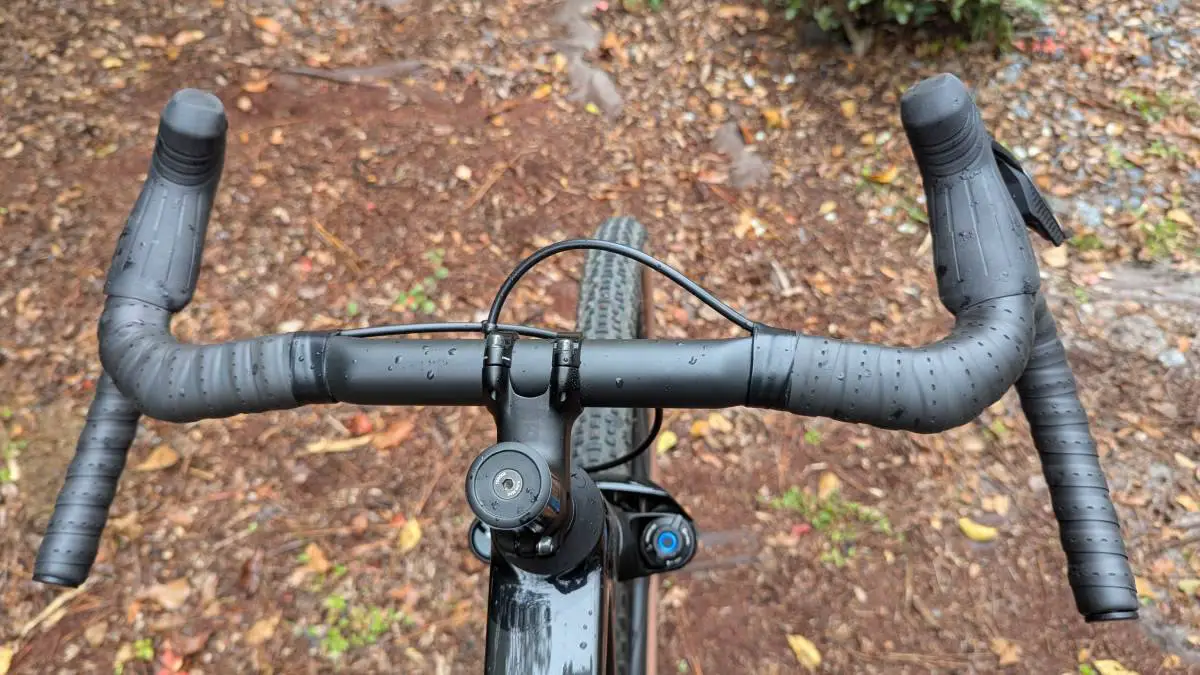
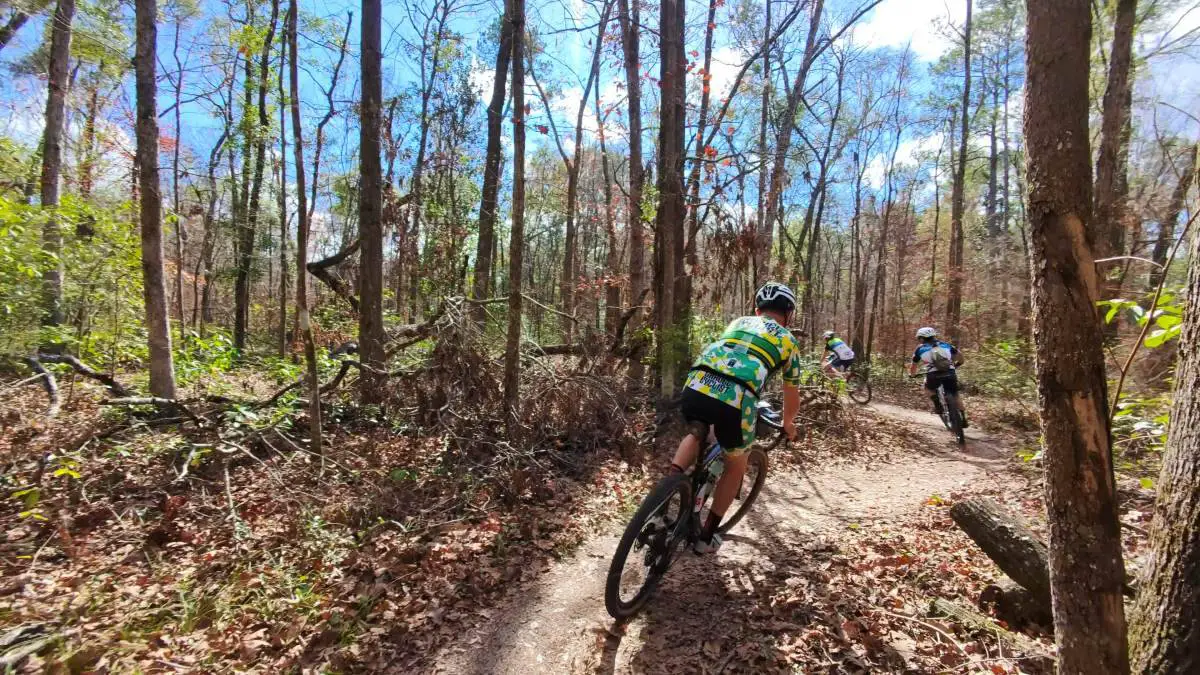
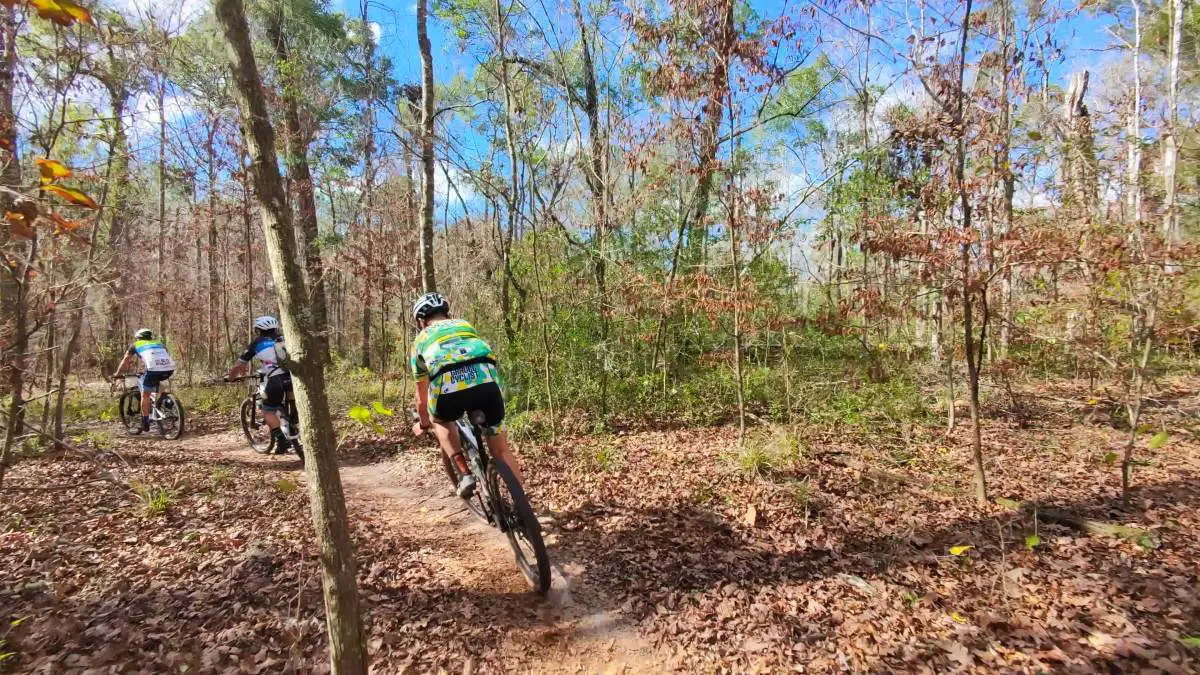
I broke the rules and I swapped to a 42cm compact drop handlebar, and for me, the bike was far more comfortable, felt more responsive, faster, and more fun to ride. All of this was important as I took the checkout to a fun mountain bike event in North Florida, the Tour de Felasco. Think 50ish miles of flowy single track with lots of small elevation changes, and a good amount of fire roads. I don’t own a mountain bike, it isn’t my thing. But, the CheckOUT was a total blast to ride on these flowy trails, and while I wasn’t setting speed records, I could ride at a decently comfortable pace through the woods. To be expected on fire roads, the CheckOUT absolutely crushed.
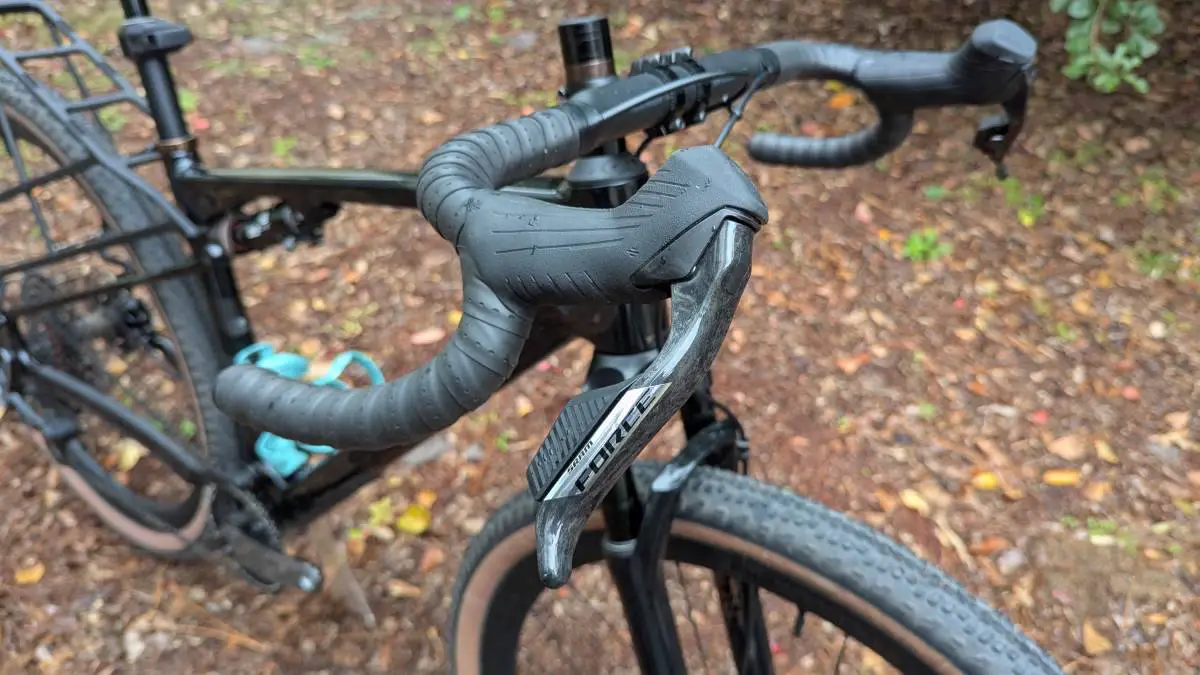
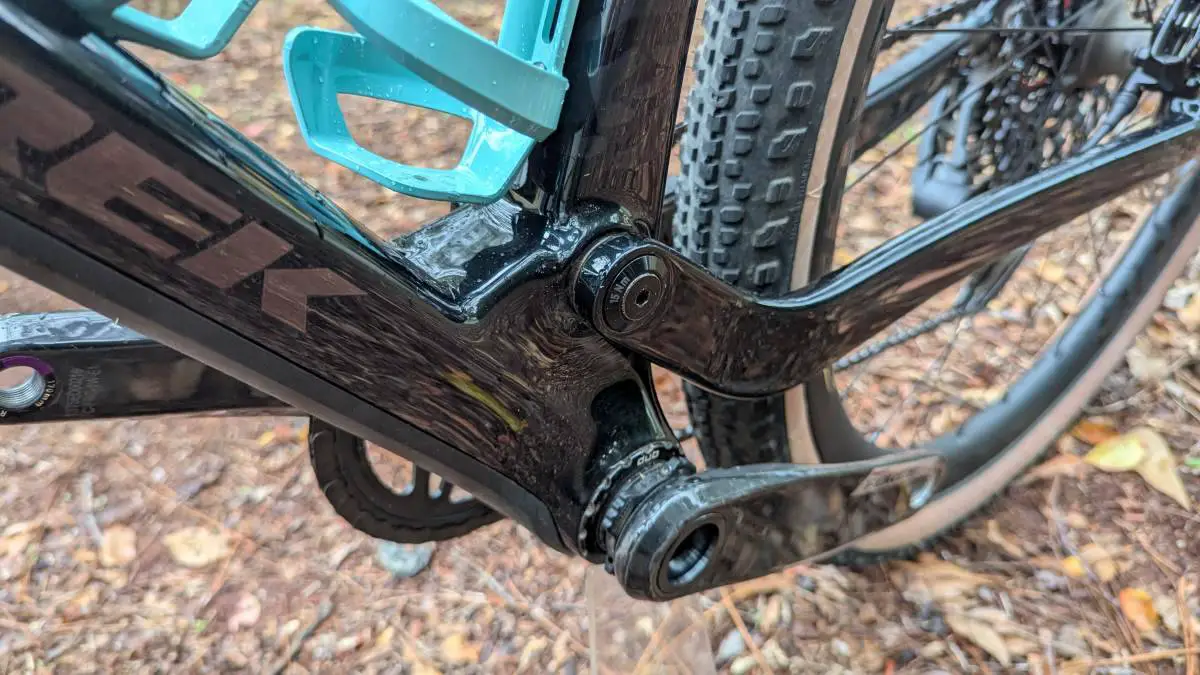
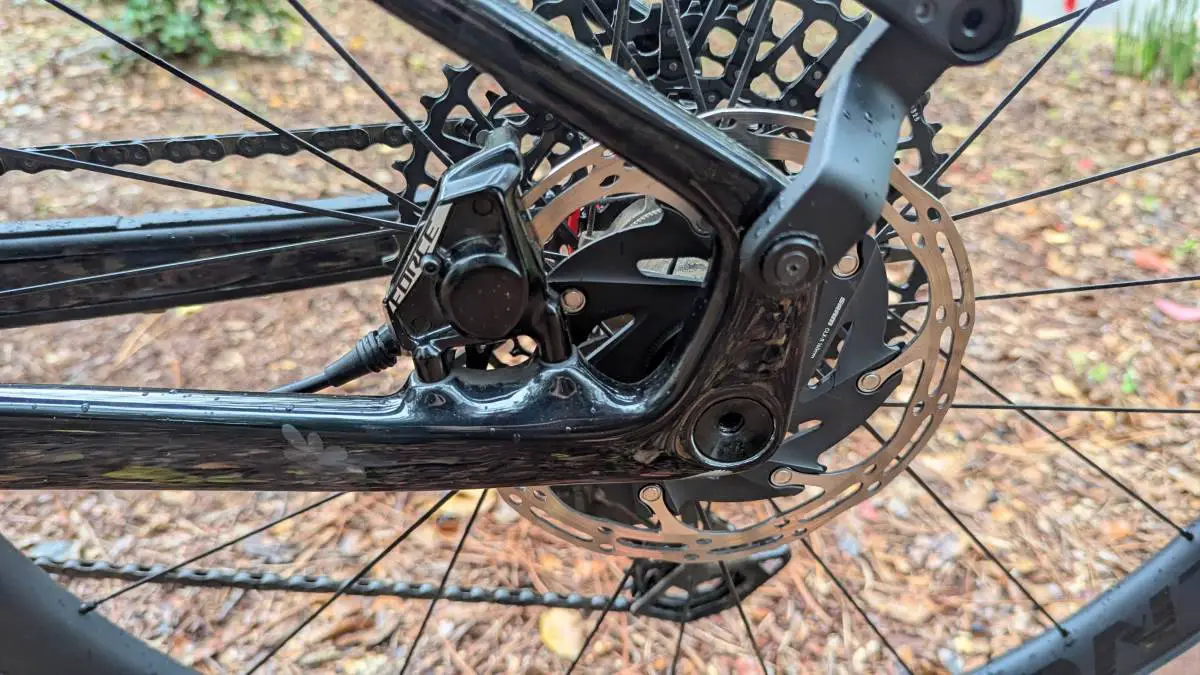
Cable routing is semi-internal, meaning nothing is routed through the handlebars, but that rear hydro housing runs inside the frame through the headset bearing… not for everyone, and bridges the gap between the rear triangle. Don’t forget the rear triangle is attached to the front triangle of the bike by suspension, pivots, and so on. I am pleased to say the CheckOUT emanated no noises from its T47 bottom bracket, suspension noise, or that brake housing slapping around.
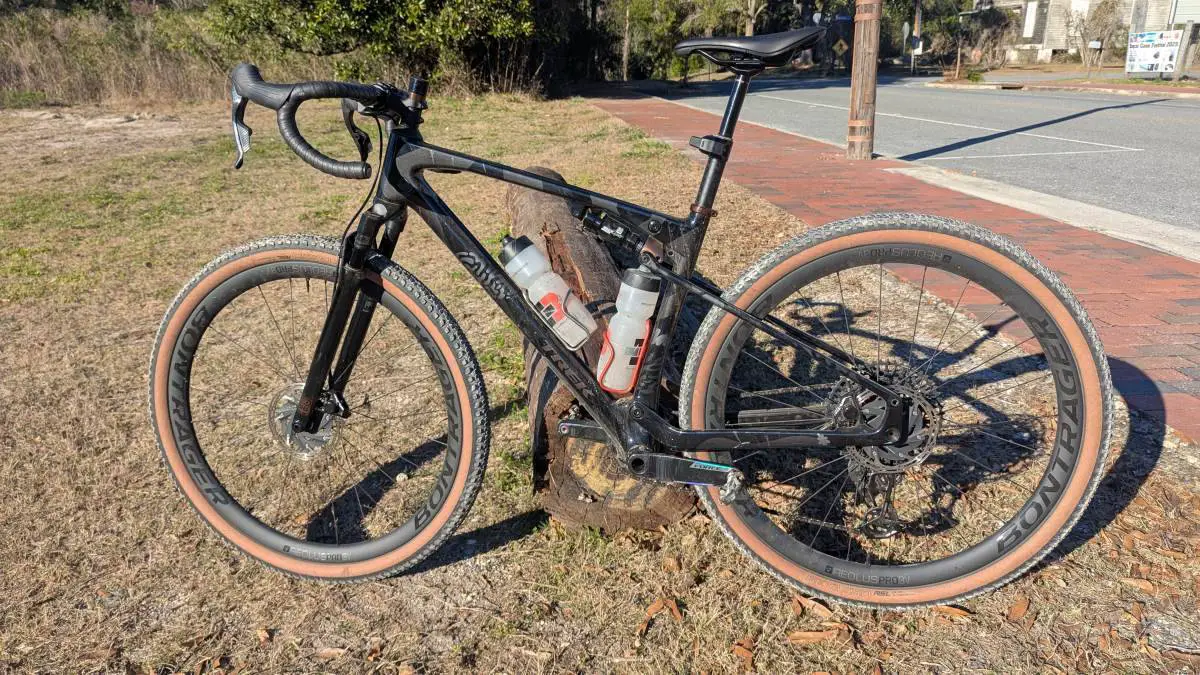
I cannot speak for the CheckOUT’s bike packing abilities, but the included rack integrates nicely and works perfectly with the rear suspension. It’s thoughtful, as are the copious mounting points for other bags. Definitely see the Trekbikes.com website for more info about that aspect. However, I would ride the Checkout with a Tailfin rack, assuming it can play with the suspension and a Tailfin trunk bag, if I was up for a couple of nights of credit card packing.
In the absence of a frame bag, I was pleased I could fit two full size water bottles onto this frame, sans any fiddling about actually drinking from them.
Pricing
My example will cost you about $US 9,000, certainly not a cheap undertaking. I haven’t researched this, but I expect the comments section may draw price comparisons between well spec’d full suspension mountain bikes, and the CheckOUT. The CheckOUT really isn’t a drop bar mountain bike, but it is a very niche bike. I’m a little perplexed by Trek’s decision to produce this bike, it doesn’t really align with anything they’ve built to date.
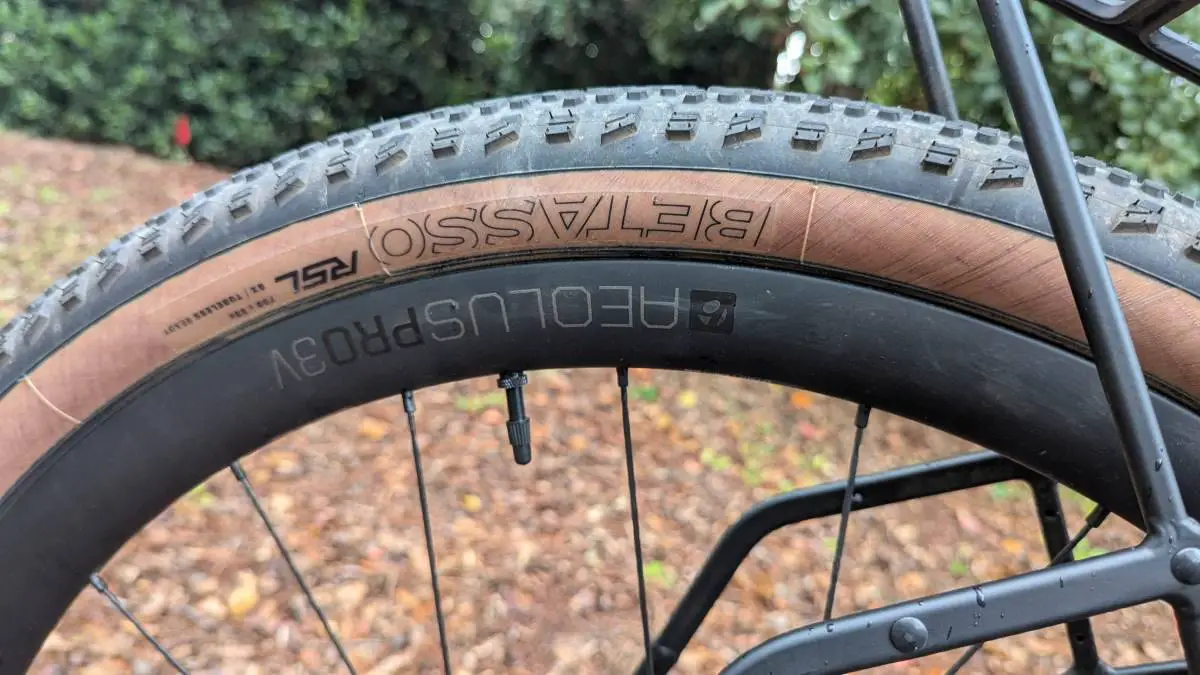
That’s not a bad thing, but I don’t see the CheckOUT as a best seller. It’s a ton of fun to ride in the right circumstances, but do pay attention to geometry, as it isn’t your typical gravel bike. I’d err on the smaller side if I was choosing a size, as it’s easier to make a smaller bike larger with a longer stem, and so on. The CheckOUT wins on the grounds of safety, comfort and confidence, but do your research about those handlebars, and tyres / tires. This spec of Betasso I would say is geared more towards proper MTB and dirt, a lighter and speedier gravel specific tyre would be a good option. I just hope Trek finds an audience for this quirky bike.
Learn more at the TrekBikes.com website.
Additional Photos
Reminder
ALWAYS BE A STEWARD FOR GRAVEL CYCLING: Respect the roads, respect the locals, respect the land, respect your fellow cyclists.
Support Gravel Cyclist:
Buy Me a Coffee – https://www.buymeacoffee.com/gravelcyclist
OR
Patreon – https://www.patreon.com/gravelcyclist
Links of Interest:
- Trek Bikes Website
- North Florida Freeride Gravel Series
- How to Create Amazing & Fun Gravel Routes!
- Gravel Cyclist’s Route Library
- Gravel Bike Tire / Tyre Pressure Recommendations
Don’t forget to Like the Gravel Cyclist Facebook page, follow G.C. on Instagram, and subscribe to our Youtube Channel. We are also on Twitter!