



Ride gravel long enough and you know the sound: the tick of a stone against the down tube, followed by that half-second of doubt. Was that my frame? Moments like these had long intrigued Pilot, the Dutch builder of titanium bicycles. What actually happens in a rider’s head, and does it differ by material? The company took the question to neuroscience firm Neurofactor, with one agreement: protocol and analysis would belong entirely to the researchers, whatever the outcome.

There was reason to want to know. Earlier association research by Neurofactor among committed gravel riders had shown something striking: carbon, the material most of them ride, turned out to be linked in the unconscious brain to damage and fragility. Titanium sat at the opposite extreme, treated by the brain as close to indestructible. What riders say about their bikes and what their brains expect of them turned out to be two different things.
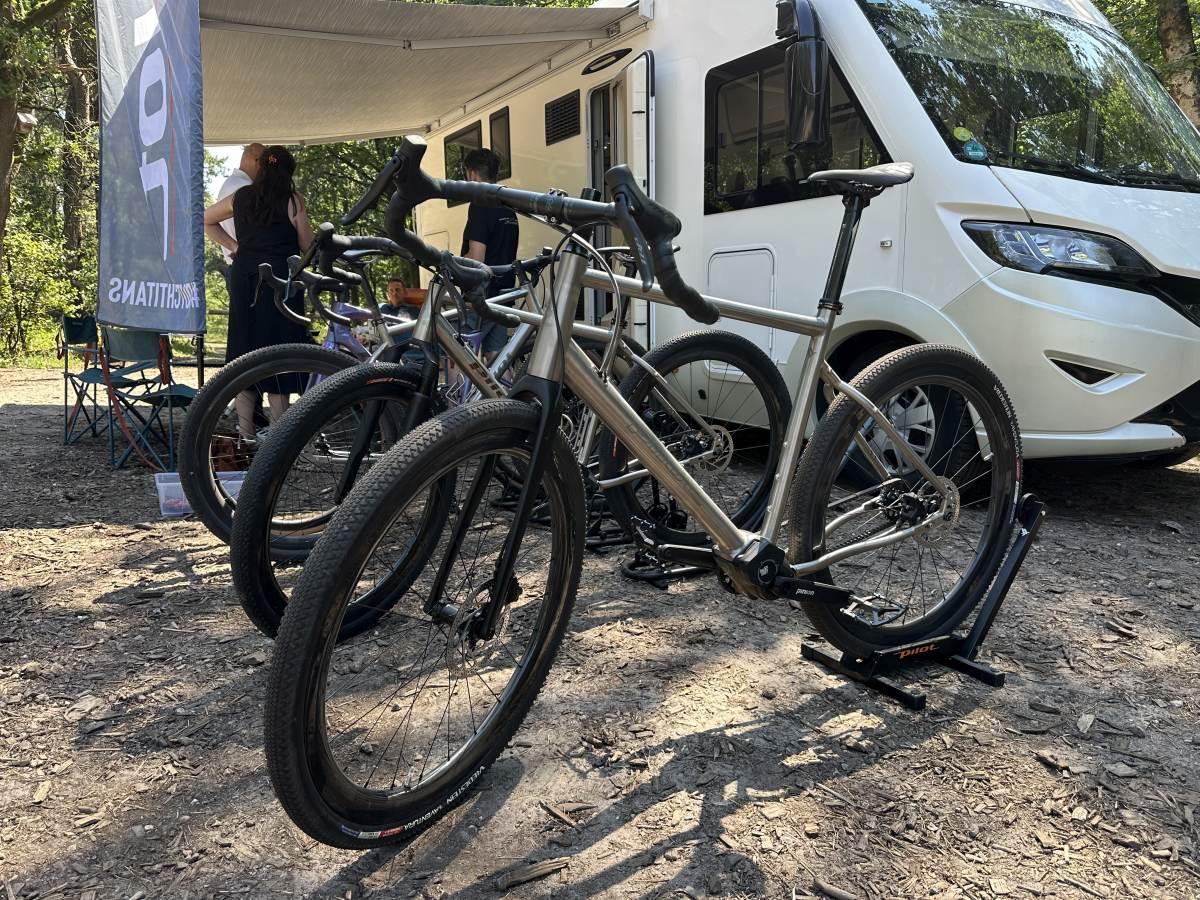
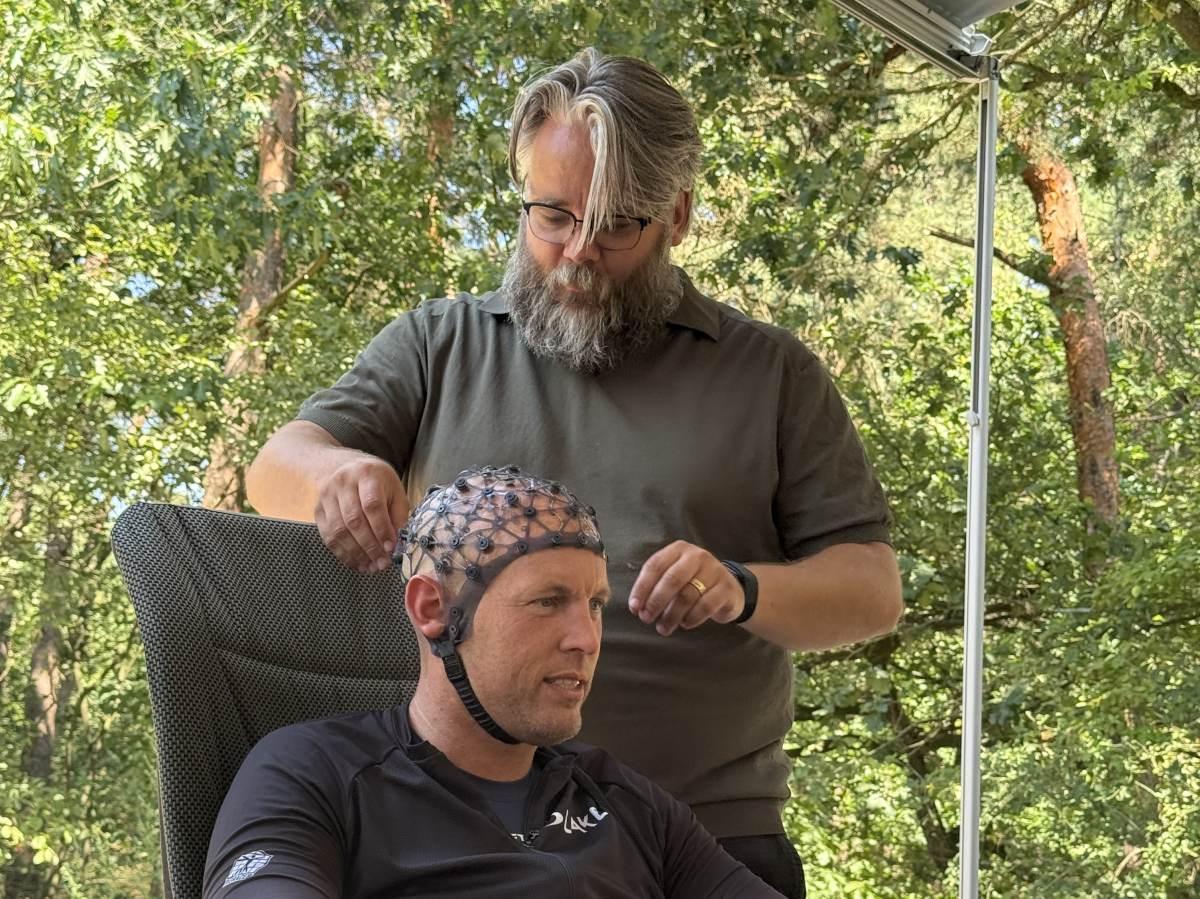
The logical next question: does that gap show up during the ride? This month it was tested, with mobile EEG during the ride itself. To their knowledge, a world first. Nineteen riders rode two identical laps on a closed test course: one on carbon, one on titanium. They wore a 24-channel EEG cap; a handlebar camera matched every moment to the brain’s response.
The answer: no. On the study’s wellbeing measure, the brain could not tell the frames apart. The vibration difference riders talk about was not visible in the brain either. And one finding dwarfed the rest: the differences between riders were many times greater than the difference between the bikes.

“Ride feel belongs to the rider,” says lead researcher Martijn den Otter.
One result may keep gravel forums busy for a while. On the most technical stretch, exactly where material trust should matter, riders steered measurably more calmly on titanium, with slightly faster times. A brain pattern consistent with less tension in the arms and shoulders, precisely where the association research predicted the difference would sit. The researchers are careful: the signal is exploratory and just barely fails to survive the full statistical correction. A lead, not a conclusion, and now the subject of a pre-registered follow-up with motion sensors, muscle measurement and a larger group.

The result is hardly an advertisement for titanium, yet Pilot is publishing it all the same. “An honest ‘no difference’ is worth exactly as much to us as a difference,” says founder Pieter van der Marel. “Our riders deserve answers built on measurement, not marketing.”
For gravel riders, the practical lesson may be the most welcome outcome of all: ride what you trust, because the biggest variable on the bike is you. Whether titanium adds anything to that is for the follow-up study to show.

Further Reading: The Press Release
Cyclists have argued about ride feel for as long as bicycles have existed. Carbon feels one way, titanium another; every rider knows it, nobody has ever been able to measure it. The question would not let go of one company in particular. Pilot – Titanium Bicycles, a small Dutch builder that has spent more than a decade making titanium bikes one rider at a time, hears the debate daily and genuinely wanted to know: is ride feel something you can measure at all? Pilot took the question to neuroscience firm Neurofactor and, knowing its own bias as a titanium builder, handed the protocol and the analysis entirely to the researchers, whatever the outcome.

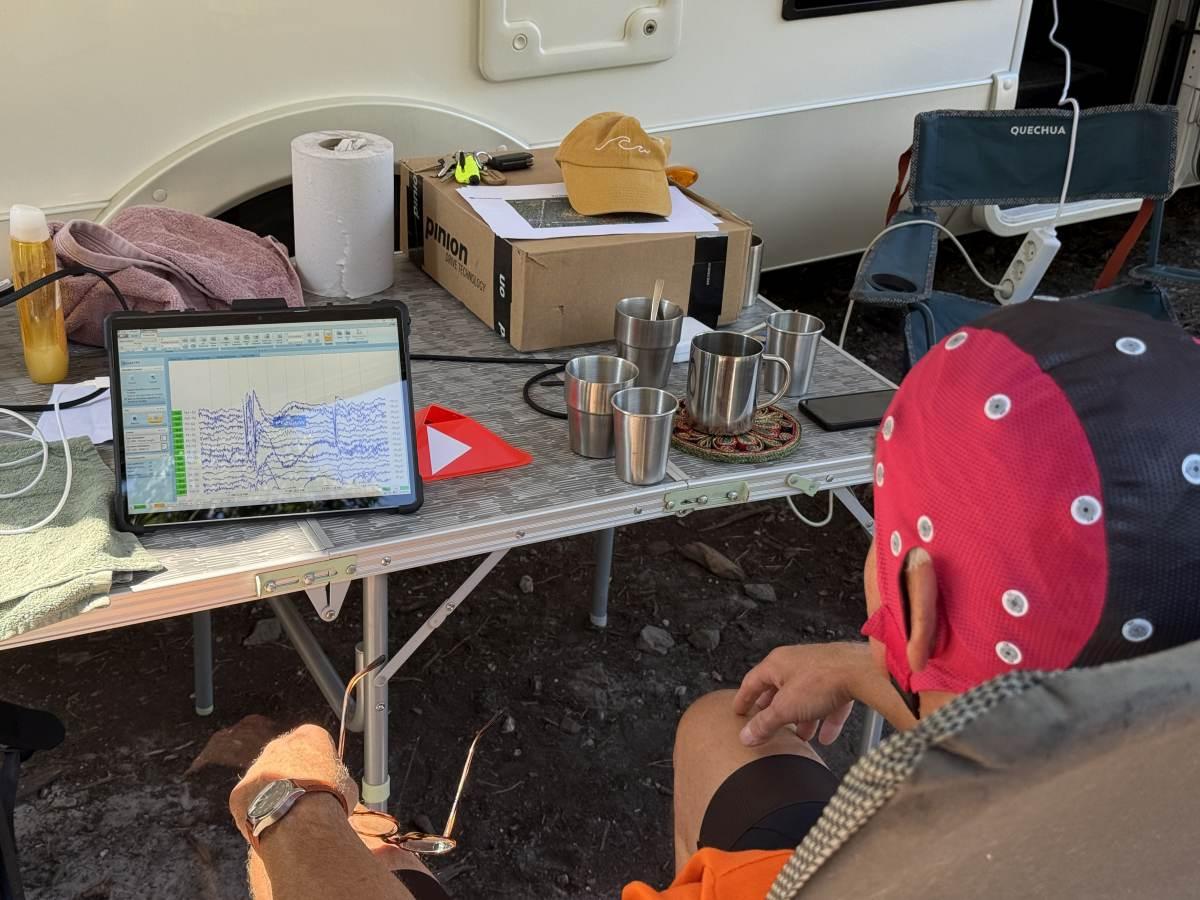
This summer, the measurement happened. Neurofactor fitted nineteen gravel riders with mobile EEG and recorded their brain activity during identical laps on a closed course, one lap on a carbon bike and one on titanium, while a handlebar camera recorded each rider’s view for alignment with the brain signal. To the researchers’ knowledge, it is the first time product experience on a bicycle has been measured during the ride itself.
The outcome is not the one a titanium builder might have hoped for. It may be more interesting.
What the Brain Said
No measurable difference in wellbeing between titanium and carbon. Riders’ brains looked the same on both bikes, however the researchers checked and re-checked the data. The famous “magic carpet” smoothness of titanium didn’t show up on the EEG either: no measurable vibration difference between the frames.
The differences between riders were many times greater than the difference between the two bikes. This, the researchers say, is the real finding. How good a bike feels turns out to live far more in the rider and the moment than in the material under them. Every rider experiences a bicycle in their own way.

And one lead. On the most technical stretch of the course, riders steered noticeably more calmly on titanium, a brain pattern consistent with less muscular tension, and posted slightly faster times there. The signal is small and unconfirmed: a trail worth following, not a conclusion. Neurofactor announces a pre-registered follow-up study to test it properly, with motion sensors, muscle measurement, blinded analysis and a larger group. The design will be published before a single rider gets on a bike, and the result will be published whichever way it points.
Quotes
“We went looking for a difference between titanium and carbon, and we didn’t find one. That’s not a failure, it’s an honest answer. The differences between people were many times greater than the difference between the bikes. Ride feel belongs to the rider.” Martijn den Otter, lead researcher, Neurofactor.
“An honest ‘no difference’ is worth exactly as much to us as a difference. Our riders deserve answers built on measurement, not marketing. And secretly, the finding suits us: if experience lives in the rider, then building each bike around one rider is exactly the right idea.” Pieter van der Marel, founder, Pilot.
“What quietly pleases me is the lead the study did find: riders sitting relaxed, brains doing remarkably little work to steer. We obsess over every design choice for exactly that reason. If it turns out that calm can be measured, I want to know.” Pieter van der Marel, founder, Pilot.
About the Research
Initiated by Pilot out of genuine curiosity about how riders experience their frames, the same curiosity behind Pilot’s earlier association research with Neurofactor. Neurofactor designed the protocol, ran the analysis and reported the findings independently. Nineteen riders, 24-channel mobile EEG, primary measure frontal alpha asymmetry. Limitations such as no blinding, no motion sensor and a small sample are stated openly in the full report (available in PDF format upon request).
About Neurofactor
Neurofactor is a Dutch neuroscience firm that studies the unconscious associations steering our decisions before we reason about them, and translates brain data into practical insight. Its speciality is taking measurement out of the laboratory: it has recorded the brains of skydivers in free fall and of drivers behind the wheel of a McLaren, and at the Mauritshuis it studied why Girl with a Pearl Earring, Vermeer’s world-famous portrait, captivates viewers like almost no other painting. Measuring cyclists mid-ride is the same idea: the world as laboratory.
About Pilot
Pilot – Titanium Bicycles is a small Dutch manufacturer that has built titanium bicycles for more than a decade, deliberately not for the masses. Every bike is engineered and built to order around one rider, meant to be owned for life: durable, low-maintenance, calm. Riders deal directly with the people who build their bike. Gravel, road, MTB, adventure and trekking.