
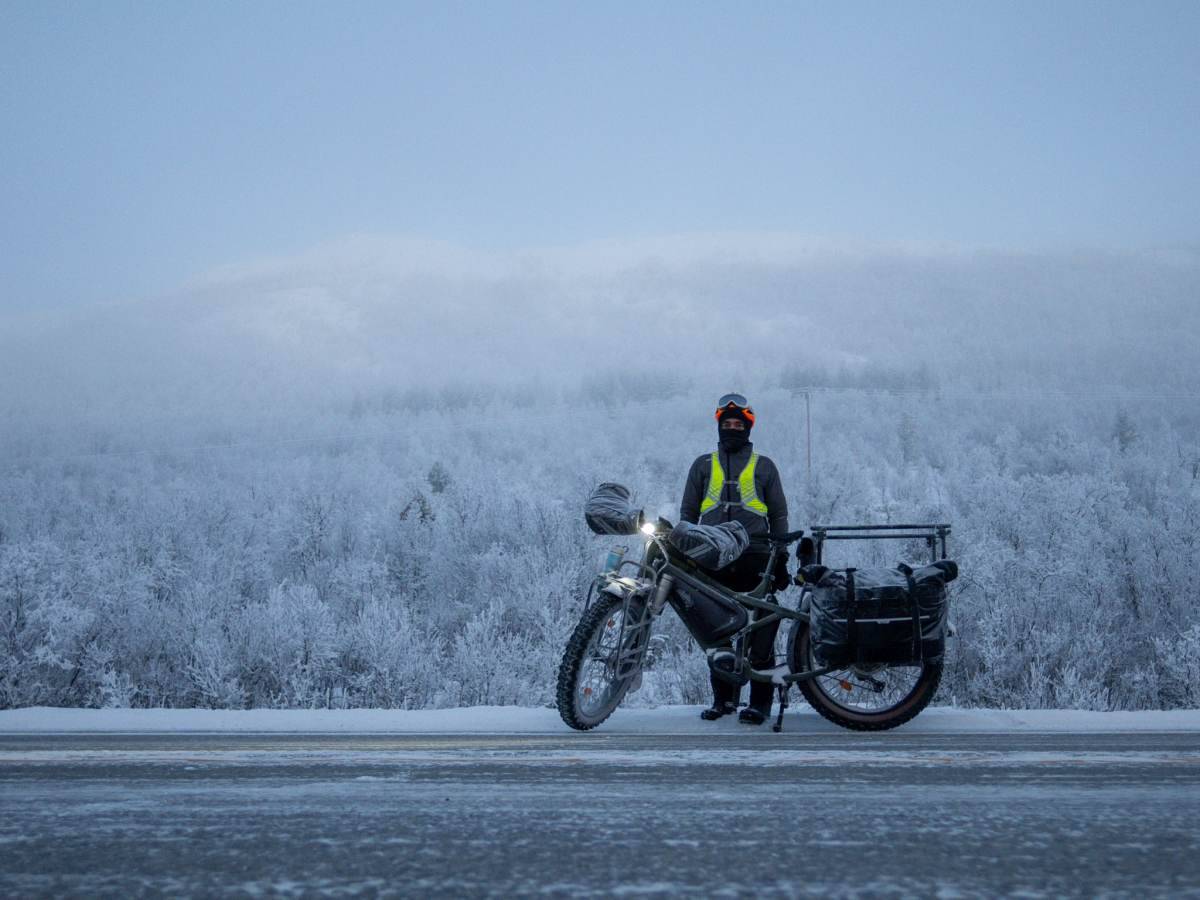
In his latest film Markus Stitz discovers the joys and challenges of winter bikepacking. ‘The Best Season’ is now available to watch for free on YouTube and follows the cyclist on a 680-km bikepacking journey from Eidsvoll to Gjøvik, Lillehammer, Ringebu, Dovre, Folldal, Alvdal, Budor and back to Eidsvoll in Southern Norway.
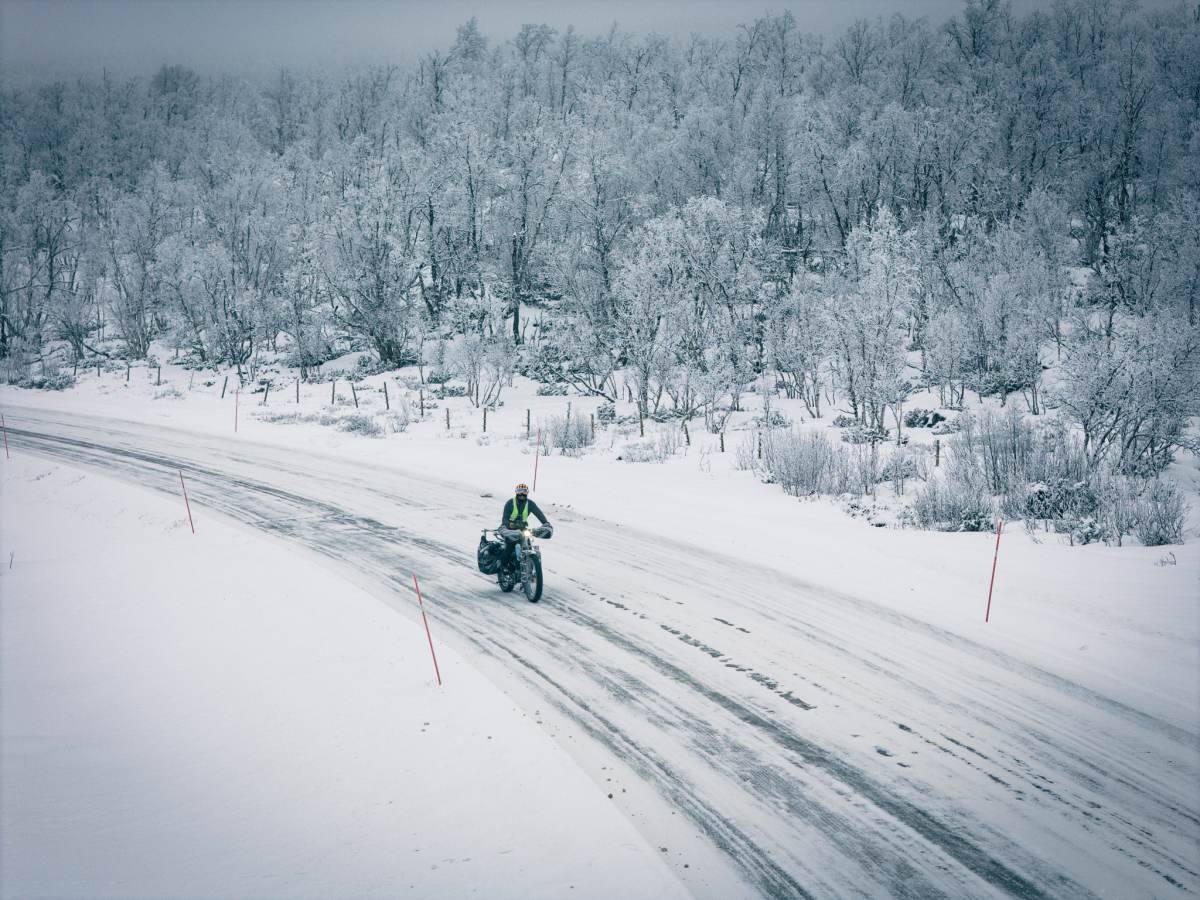
Riding a Tern Orox S12 e-cargo bike equipped with two 800Wh Bosch batteries, studded 45NRTH Dillinger tyres and full winter luggage, the bike weighs around 55 kilograms when fully loaded. While the motor assistance makes long distances possible — up to 130 kilometres on the longest day — the weight adds its own challenges on snow and ice.
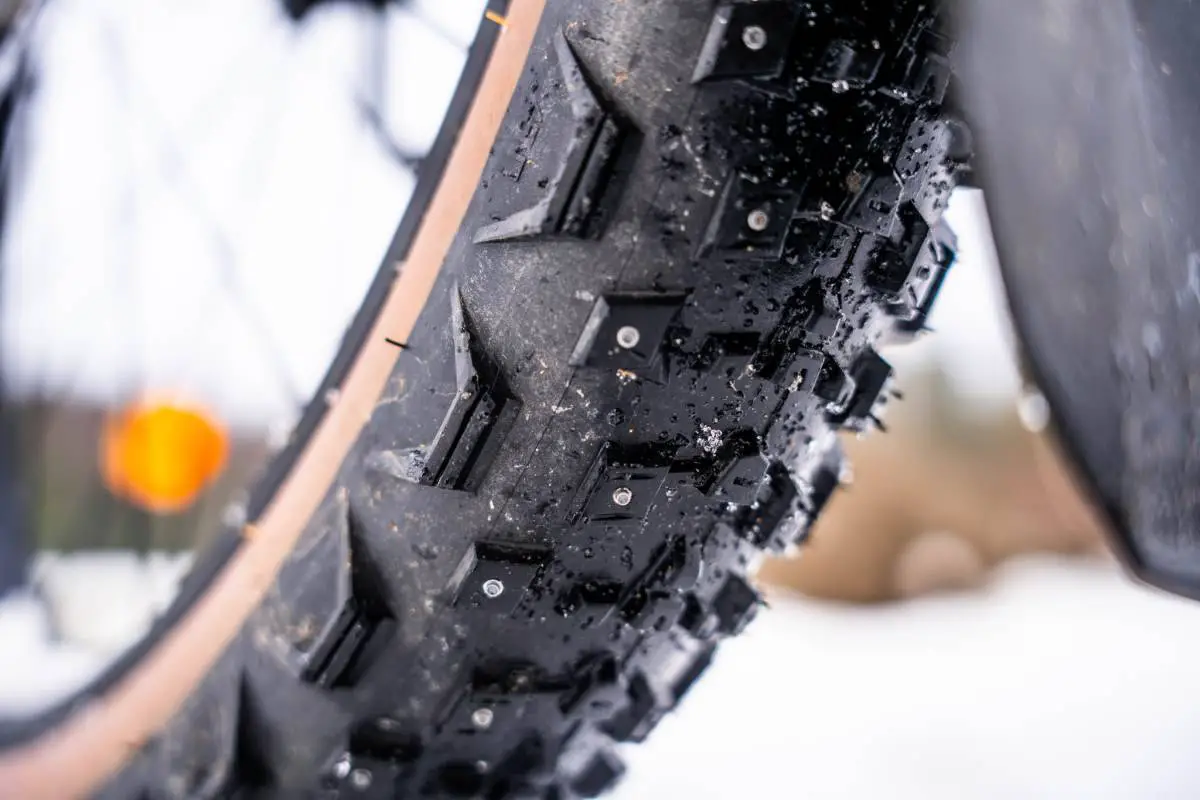
To prepare for the trip, Stitz spent weeks testing gear and riding in sub-zero conditions. He practised handling heavy loads in snow, fitted and tested studded tyres himself, and carried full winter camping equipment as a safety backup, even though he ultimately stayed indoors throughout the journey.
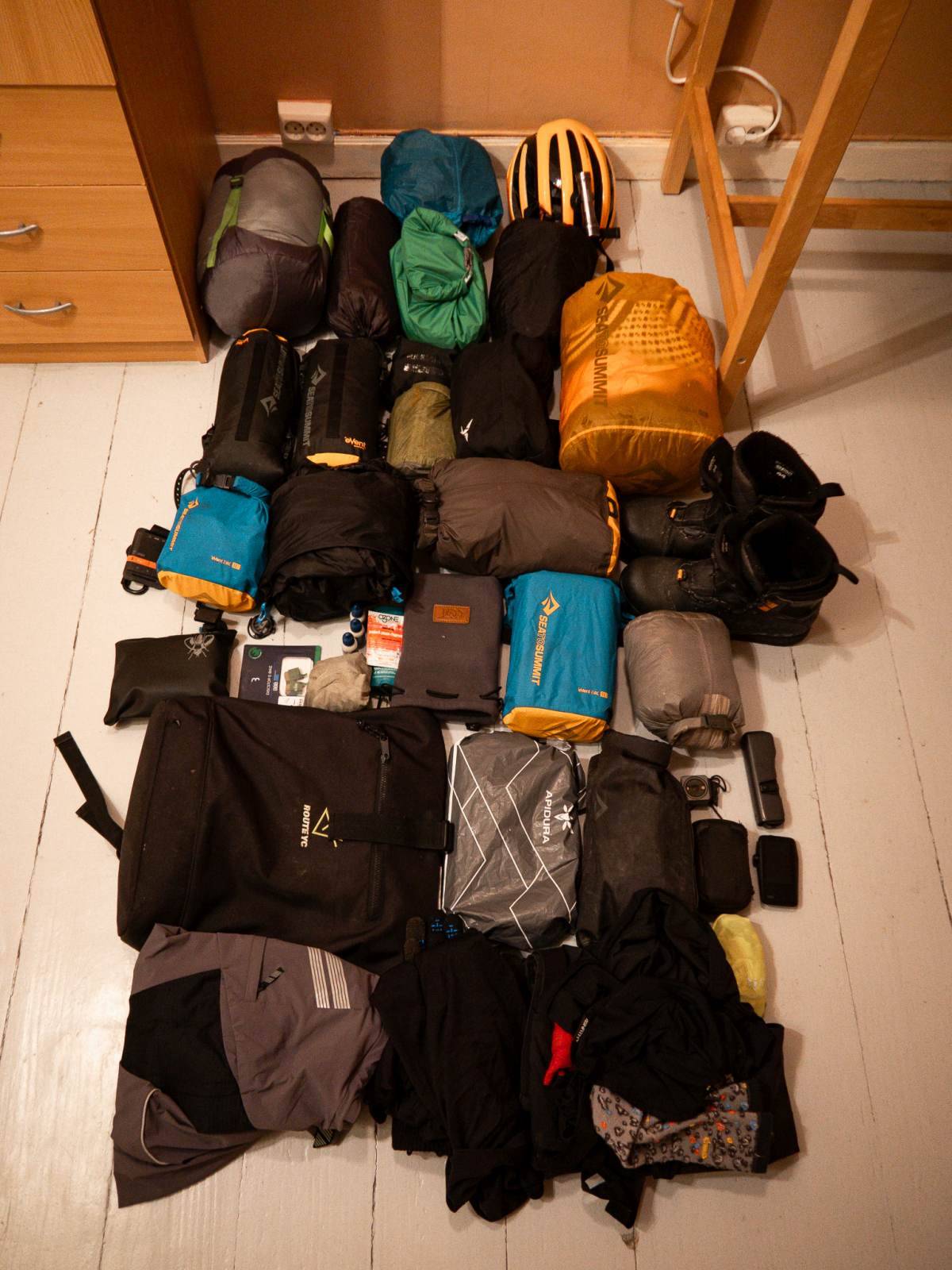
“For this trip, I left very little to chance,” he explains. “When conditions leave no margin for error, preparation becomes part of the experience.”
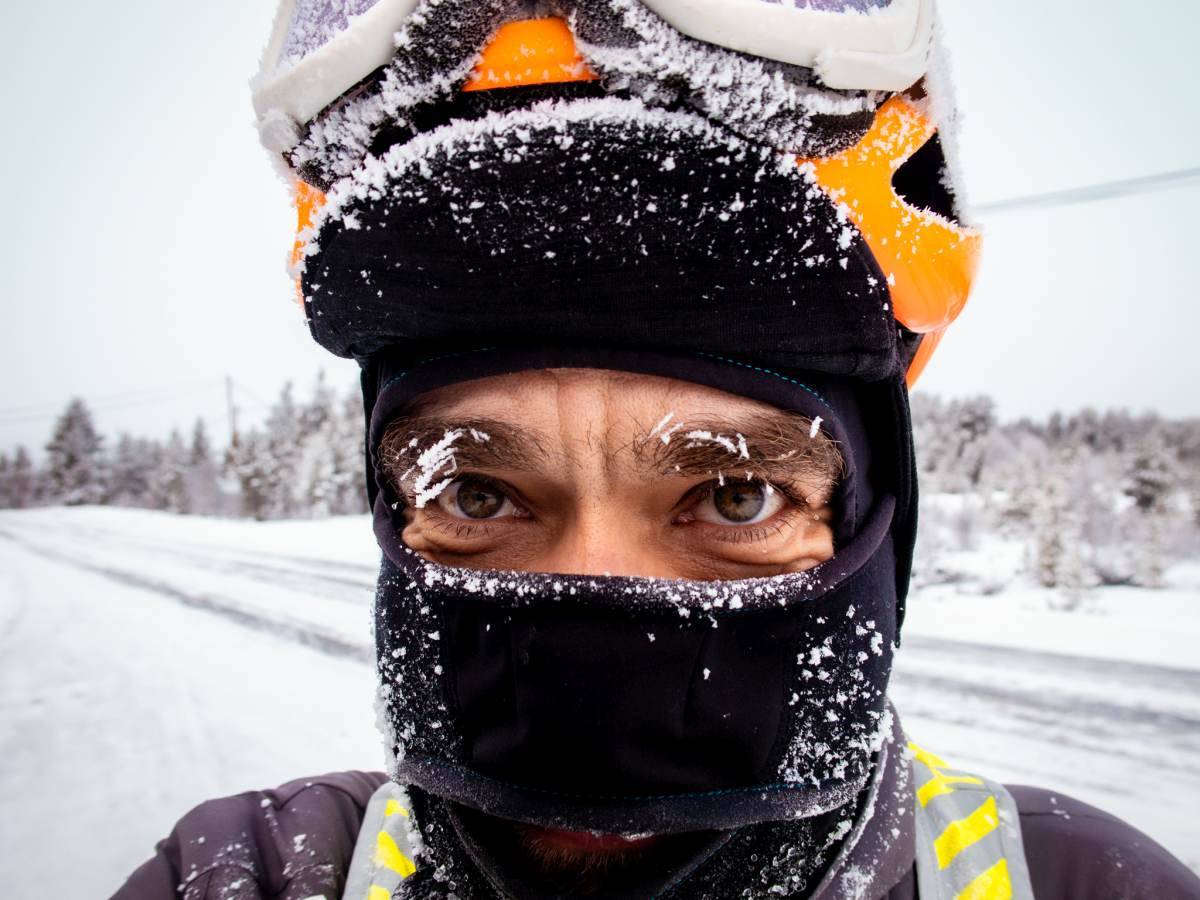
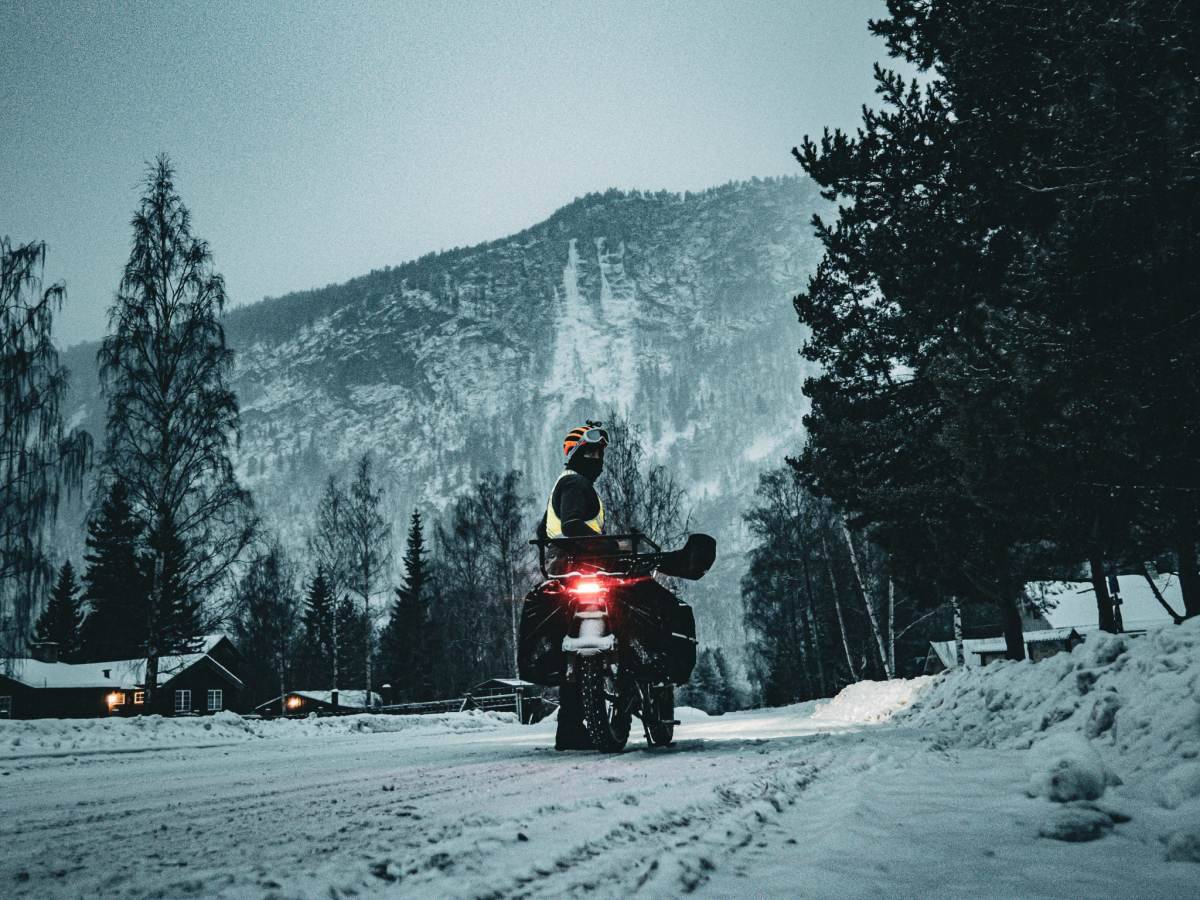
Travelling from Hageseter in Dovre National Park towards Alvdal, Stitz experienced the full intensity of the Norwegian winter, which required the right equipment for the journey. ‘Cold air sinks into the valleys, and long descents amplified the exposure. I had ice building on my eyebrows and face. Ski goggles were great to protect my eyes, while layers of merino wool and winter cycling gear kept frostbite at bay.
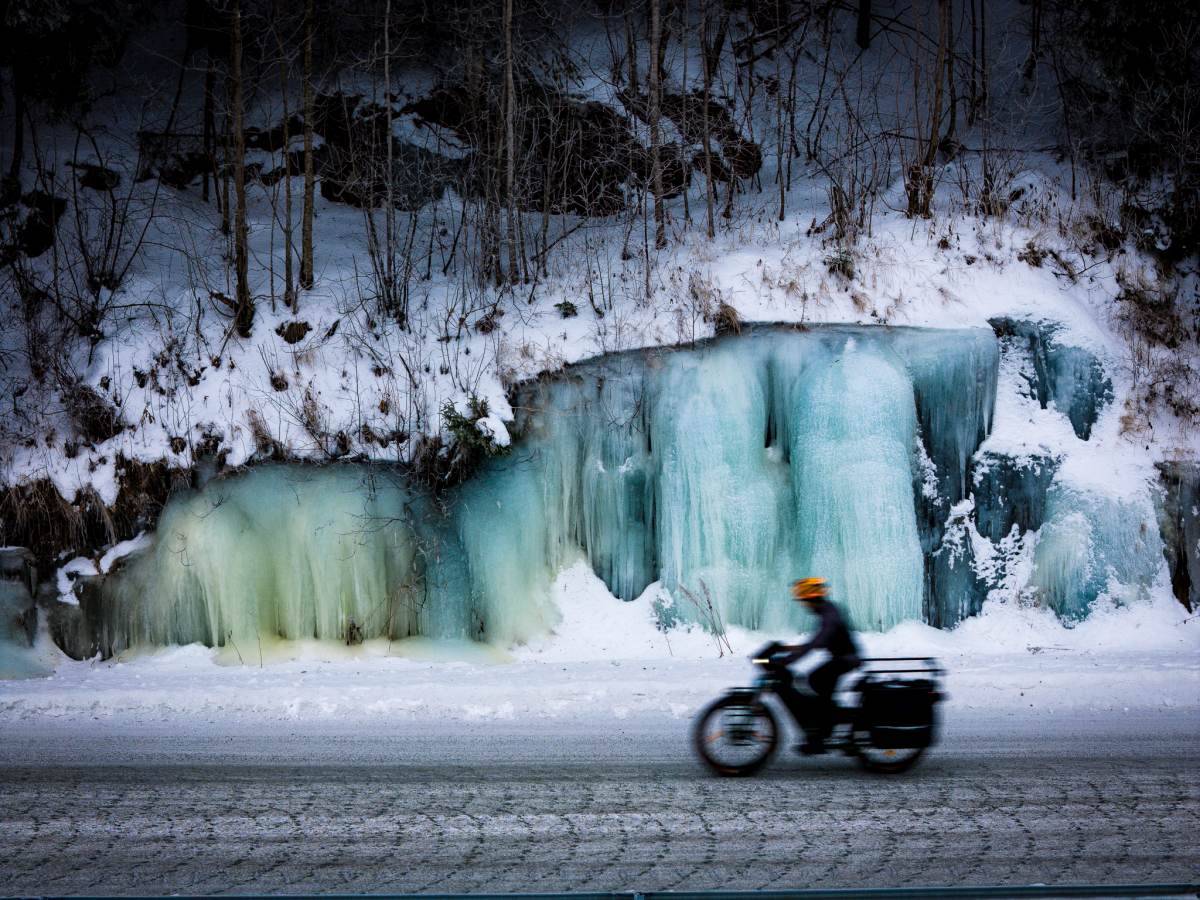
Despite riding an electric bike, Stitz notes that the biggest challenge is not battery life but human endurance. “It was not the two batteries on my e-bike that drained much faster in the cold,” he says. “It was my personal energy levels I had to monitor more often.’
Norway’s winter infrastructure played a key role for the trip. Hostels, huts and campsites remain open even in January. ‘Places are quiet, welcoming, and well adapted to winter travel,” Stitz says. “When I arrived at Hageseter in the dark, prepared to pitch my tent, the owner instead led me to a heated hut.”
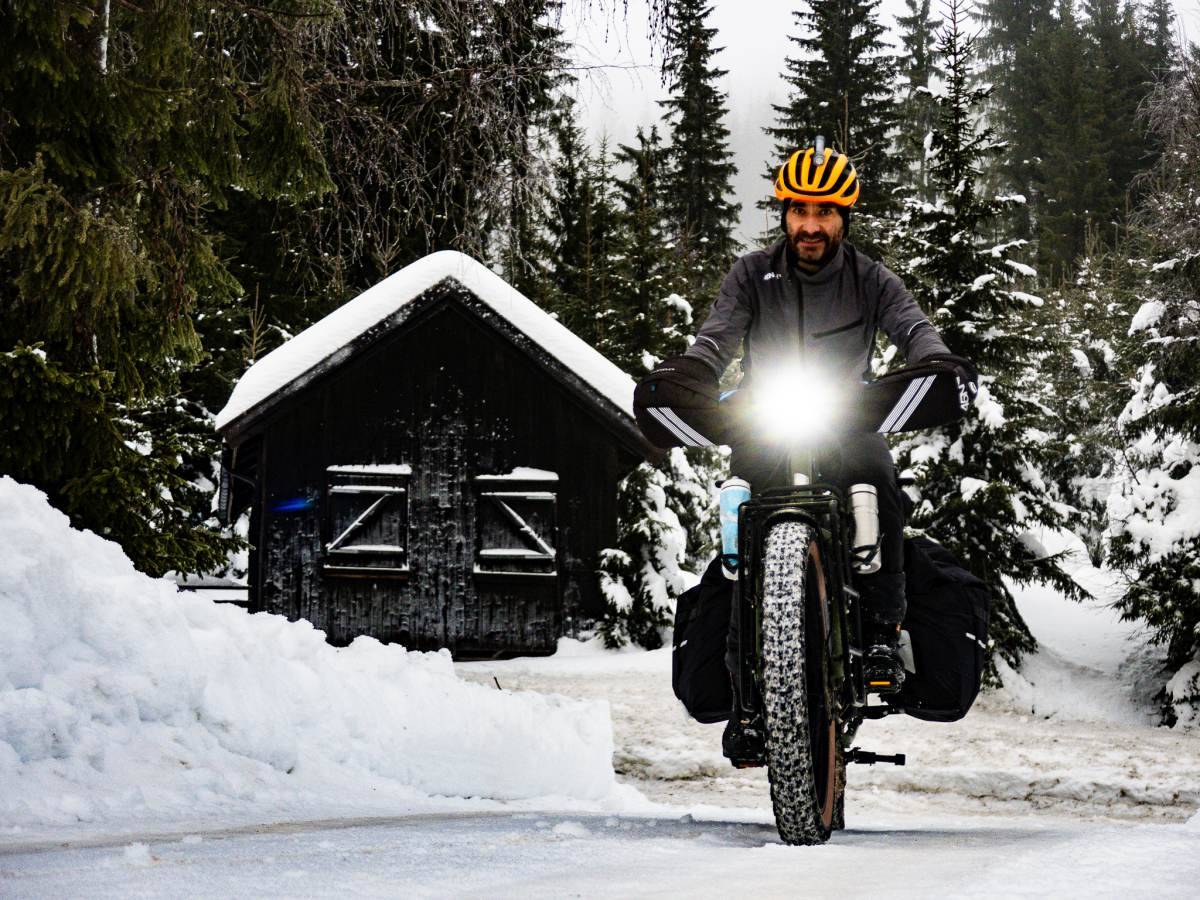
While flexibility is needed on bike trips, this need is amplified for winter adventures. Each morning, Stitz checked forecasts, adapted routes along the way, and delayed booking accommodation until midday, when distances and conditions become clearer.
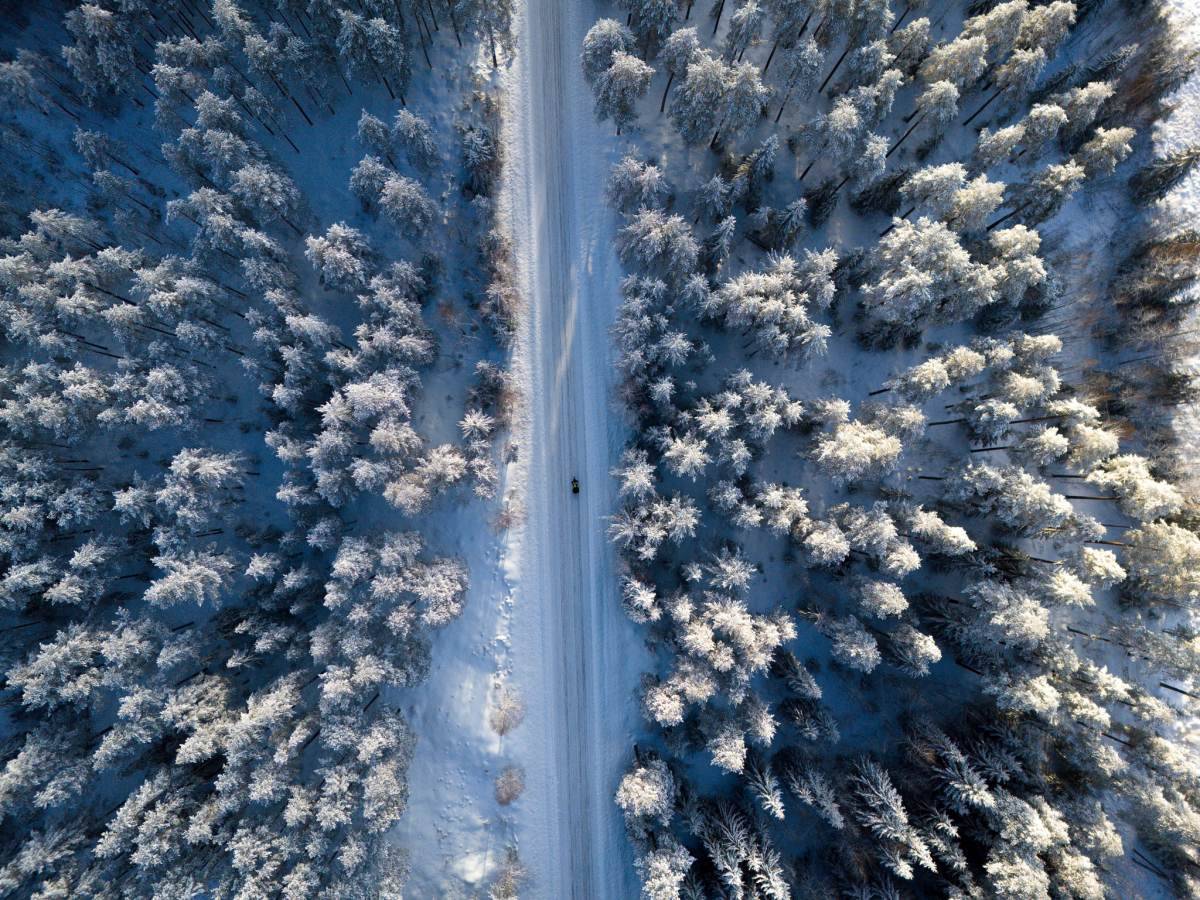
Even if winter cycling is far from comfortable, Stitz believes the rewards outweigh the hardship. “To say cycling in winter is always enjoyable would be a lie,” he says. “But the rewards are greater than in any other season — frozen rivers, snow-covered landscapes, and days that feel truly earned.”
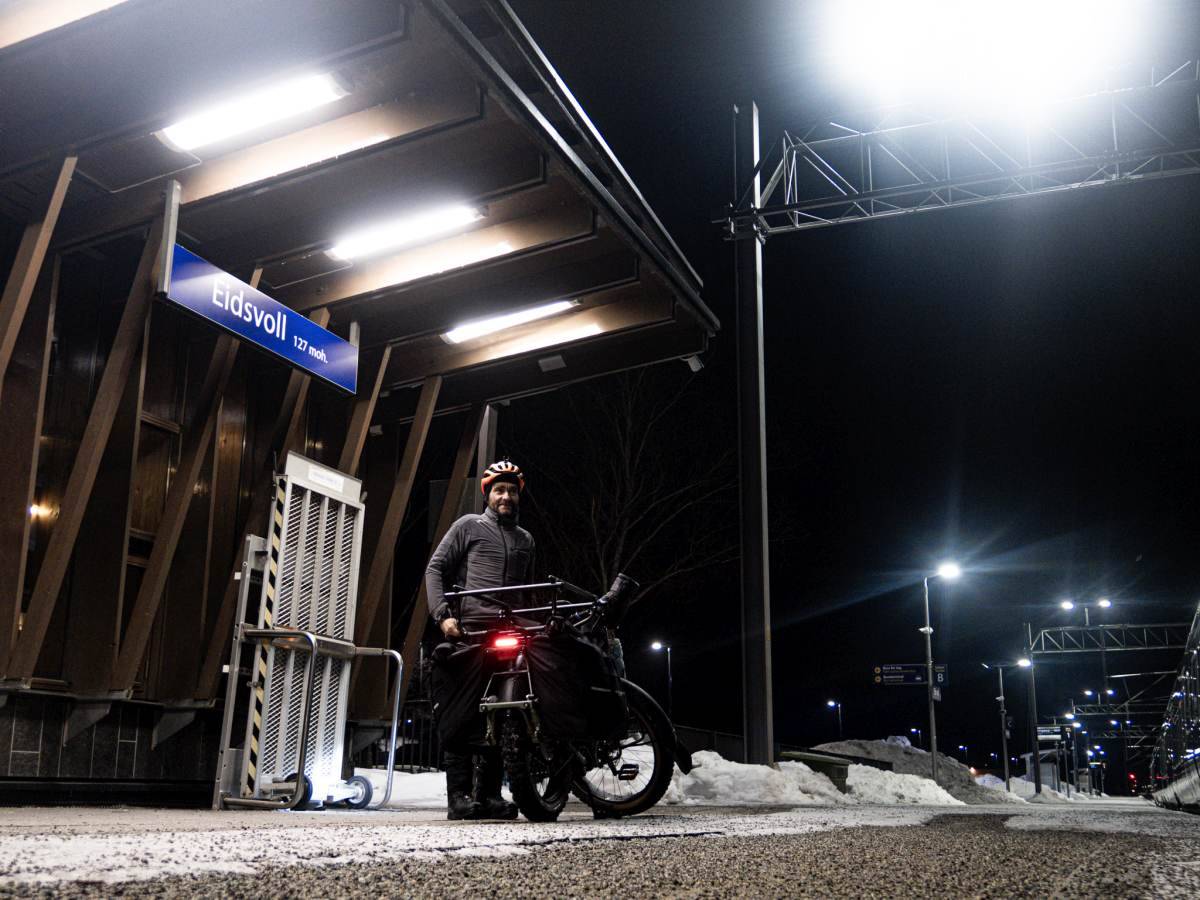
The journey forms part of Stitz’s ongoing work exploring landscapes, slow travel and human resilience through cycling; combining storytelling, photography and film to capture places at their most raw and quiet.
About Markus Stitz
Markus Stitz is a route designer, filmmaker, photographer and writer based in Edinburgh. Originally from Germany, he has explored Scotland extensively since moving there in 2009. Before cycling 34,000 kilometres unsupported around the world on a single-speed mountain bike, he mapped his first long-distance route, the Capital Trail, and on his return founded Bikepacking Scotland, through which he designs bikepacking and gravel routes across the country.
Learn more at – www.markusstitz.com / www.bikepackingscotland.com